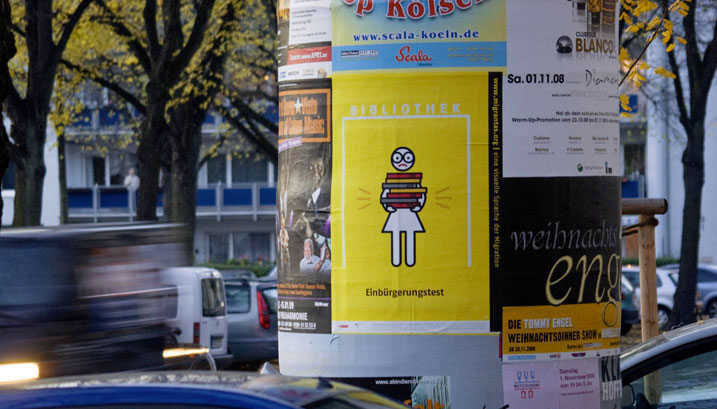
2008 | Bundesmigrantinnen | Cologne
Projects
2017/9 | Coexistence in the
immigration society |
A visual language of diversity
| Brandenburgo, DE
Project to sensitize and raise awareness among students about
important issues of coexistence in today's immigration society. Participants:
Kinder von Golzow 4. 6. Kl., Grund- und Oberschule Carl von Ossietzky-Schule
Werder 8. Kl., Freie Schule Angermünde 7., 8., 9. und 10. Kl., Goethe-Grundschule
Kremmen 4. Kl., Freie Schule Baek Prignitz 6.Kl., Da Vinci Campus Nauen
6. Kl, Evangelische Grundschule Frankfurt (Oder) Kl. 4b., Astrid-Lindgren-Grundschule
Wusterhausen/Dosse 5. Kl., Niedersorbisches Gymnasium Cottbus 7.Kl., Landweg
e.V. Freie Schule und Kindergarten Prignitz 4. 5. 6.Kl., Leonardo Da Vinci
Campus Nauen 6 Kl., Waldschule Oranienburg 4. 5. 6.Kl., Kinderschule Oberhavel
4. 5. 6. Kl., Grundschule Blauer Planet Schipkau 5. 6. Kl., Kinderakademie
Eberwsalder 5. 6. Kl., Grundschule Friedrich Wolf Lehnitz 6. Kl., Werner-Seelenbinder-Grundschule
Lübbenau 6. Kl., Montessori-Oberschule Potsdam 4. 5. 6. Kl., Frederic-Joliot-Curie-Schule
Brandenburg an der Havel 4. 5. Kl., Grund- und Oberschule „Mina Witkojc“
Burg 5. Kl. , Oberschule Theodor Fontane mit Primarstufe Potsdam 6. Kl.,
Karl-Sellheim-Schule Eberswalde 4. 5. Kl., Dorfschule Wallmow Carmzow-Wallmow
5. 6. Kl. , Grundschule am Blumenhag Bernau 6. Kl., Montessori-Oberschule
Potsdam 4. 5. 6. Kl.
A project of Kollektiv migrantas in cooperation with the State Integration
Officer of Brandenburg. Funded by the MBJS and Integrationsbeauftragte des
Landes Brandenburg.
more
2026 | DIFFERENT, BUT EQUALLY IMPORTANT: STRENGTHENING VOICES, CREATING VISIBILITY |
Images of Coexistence in public space | Berlin, DE
Workshops: In cooperation with the Neighborhood Mothers in Neukölln. In groups, participants discuss which pictograms best represent women's participation. They also develop texts, colors, and concepts for new pictograms.
Urban Action: The resulting series of pictograms, displayed in the approximately 180-meter-long shop windows of the Spore Initiative, makes different life realities visible and encourages the Neukölln community to reflect on them and take collective action toward a more just, inclusive, and respectful neighborhood. The Neighborhood Mothers in Neukölln support families through counseling, information, and assistance in dealing with daycare centers, schools, and public authorities. Coordination: Leyla Çelik. Project participants: Alisar, Amne, Arzu, Bala, Ceylan, Cimen, Diana, Farzana, Geta, Gordana, Gülaynur, Gyulfie, Natalija, Nurizat, Olena, Randa, Sultan, Tirsit. Funded by Spore initiative.
more | more
2026 | UPCYCLING! | Images of Coexistence in public space | Berlin, DE
Workshops Sewing workshop with materials that carry stories. Banner recycling.
Repairing,, sharing knowledge, strenthering the neighborhood. Founded by
BENN Wartenberg.
2026 | Making Women´s
voices visible | Images
of Coexistence in public space | Berlin, DE
Workshops: we are showcasing feminist voices- especially intercultural and
migrant perspectives from women. The collaboratively developed pictograms
and message will be disseminated in public space using posters, postcards
and bags. In collaboration with: S.U.S.I. Intercultural Wome´s Center.
Funded by Gleichstellungsbeauftragten Tempelhof-Schöneberg and House
of Resources.
more
2025-2026 | End of Life Care
| Images
of Coexistence in public space | Berlin, DE
Workshops for representatives from Hospice and palliative care services
and with people with migration background or historiy who eoncounter the
topics of seniors, palliative care and end of life issues in their private
or professional lives. 60 drawings by participants, a serie of 18 pictograms
on 6 roll-up banners, flyer in various languages and a broschure. Urban
campaign: distribution of A3 posters, bags, pins and postcards. Exhibition:
Foyser of the Berlin Senate Department of Science, Health and Care. In cooperation
with Zentralen Anlaufstelle Hospiz and Unionhilfswerk. Funded by Unionhilfswerk and LOTTO Stiftung
Berlin.
more
2025 | Our Library = Our
Diversity | Personal Dedication
| Berlin Mitte, DE
Workshops in collaboration with: Bezirkszentralbibliothek Philipp-Schaeffer
(Mitte), Schiller-Bibliothek mit @hugo Jugendmedienetage (Wedding), Bruno-Lösche-Bibliothek
(Tiergarten) zusammen mit der Vertreter*innen von MOsNachbarschafts-Initiativen:
Intikuren, Riwwel, Hanin Chor, Korea Verband e.V., Ni Una Menos Berlin,
Zusammen Berlin, Farafina Afrika-Haus e.V., Belarusische Gemeinschaft RAZAM
e.V. und Wanowa. Founded by: Mitteln der Senatsverwaltung für Arbeit,
Soziales, Gleichstellung, Integration, Vielfalt und Antidiskriminierung
im Rahmen des Partizipations- und Integrationsprogramms und des Fördervereins
Stadtbibliothek Mitte e.V.
more | more
2024 | Mujeres Migrantes
| Images of coexistence
in public space | Vitoria-Gasteiz, SP
Workshops in collaboration with: La casa de las mujeres together with the
Vitoria-Gasteiz City Council, Amekadi Koop and Emakumeen Extea. Campaign:
6 pictogramms in various digital formats presented in International Migrants
Day and International day for de elimination of Racial Discrimination. Founded
by: Ayuntamiento Vitoria-Gasteiz and Amekadi Koop
2024 | Our Library = Our
Diversity | Personal Dedication
|
Berlin Tempelhof-Schöneberg, DE
Workshops in collaboration with: Eva-Maria-Buch-Haus, Theodor-Heuss-Bücherei, Edith-Stein Bibliothek together with representatives of MOsNeighborhood initiatives: Afganischer Frauenverein Berlin - MAH e.V. Deutschlibanesiche Freundschaftsgruppe e.V. Deutsch-Tamilische Gesellschaft e.V. Familienzentrum Nahariya Schule Nachbarschafts- und Selbsthilfezentrum in der UFA-FAbrik e.V. Frauengruppe von Waschküche, Kalima-Nachbarschaftsheim Scöneberg e.V. MigrArte Peru e.V., SpracCafe Polnisch e.V.-filiale Südkreuz- und Wanowa. Final presentation: with all participants, 154 drawings by the participants, a series of 13 pictograms on 2 roll-ups, the published posters, buttons and postcards to take away, visual impressions of the project and a pictogram bag and bookmark campaign in the Schöneberg town hall. Urban action: advertising columns, posters in public spaces, library flag, distribution of A3 posters, postcards and bags. Founded by: Senatsverwaltung für Arbeit, Soziales, Gleichstellung, Integration, Vielfalt und Antidiskriminierung im Rahmen des Partizipations- und Integrationsprogramms und House of Resources Berlin.
more
2024 | Voting works! - Strengthening democracy! | images of coexistence in public space | Berlin, DE
The campaign called on people with a migration background to participate in the elections and was also intensively promoted on social media to inform people about the European elections. With Allianz Ukrainischer Organisationen e.V., Club Dialog e.V., KulturMarktHalle e.V., Eed Be Eed e.V., La Red e.V., Migrantas e.V., Migrationsrat Berlin e.V., MoveGlobal e.V., Polnischer Sozialrat e.V., TBB-Berlin – Türkischer Bund in Berlin-Brandenburg e.V. und VIA Berlin/Brandenburg e.V. Founded by: Senatsverwaltung für Arbeit, Soziales, Gleichstellung, Integration, Vielfalt und Antidiskriminierung gefördert.
more
2024 | Drehbaren Geschichten Tempelhof-Schöneberg | images of coexistence in public space | Berlin, DE
The Interkulturelle Haus Schöneberg and Migrantas e.V. have launched the art project "Rotating Stories" together with the neighborhood. This interactive art object, consisting of rotating cubes on the front facade of the IKH, invites passers-by and visitors to think about and exchange ideas about important topics in the neighborhood. Over 200 votes were collected to select the topics that are most relevant to the neighborhood. On July 13, 2024, the art object was officially opened as part of the IKH summer festival. District Mayor Jörn Oltmann gave an opening speech and inaugurated the interactive art installation. Visitors were able to discover 48 images and messages on the topics of migration, flight and intercultural dialogue, as well as design their own pin buttons and tote bags. Gefördert: Bezirksamt Tempelhof-Schöneberg Berlin.
more
2024 | Rotating Stories Lichtenberg | images of coexistence in public space| Berlin, DE
The Association Verein für Aktive Vielfalt e.V. and Migrantas e.V. have launched the art project "Rotating Stories" together with the neighborhood. This interactive art object, consisting of rotating cubes, invites passers-by and visitors to think about and exchange ideas about important issues in the neighborhood. Over 200 votes were collected to select the topics that are most relevant to the neighborhood. The art object was opened on International Human Rights Day. Visitors were able to discover 48 pictures and messages on the topics of migration, flight and intercultural dialogue, as well as design their own pins and bags, complete a puzzle and take home or give away postcards and posters. Founded by: Bezirksamt Lichtenberg Kulturfonds Berlin.
more
2024 | I belong to it , making Afro-realities visible | images of coexistence in public space | Berlin, DE
Workshops and Berlin urban campaign in cooperation and collaboration with Sources Èspoir. Posters for subway campaign, carrying bag for painting action, city banners for urban campaign, postcard + mesh banner and roll-ups. Founded by: Sources dÉspoir durch Senatsverwaltung für Arbeit, Soziales, Gleichstellung, Integration, Vielfalt und Antidiskriminierung im Rahmen des Partizipations- und Integrationsprogram.
more
2024 | Mujeres Migrantes | images of coexistence in public space | Vitoria-Gasteiz, SP
On October 14 and 15, we held workshops with women with a migrant background in La Casa de las Mujeres - Vitoria-Gasteiz. Together with the Ayuntamiento de Vitoria-Gasteiz, Amekadi Koop - Facilitación y convivencia and Emakumeen Etxea / Casa de las Mujeres, we focused on networking, exchange and empowerment, with different stories of women with a migrant background being the focus. They chose which pictograms they wanted to place in the urban space of this city. The campaign, with 6 pictograms in different digital formats, will be presented between December 18, 2024 (International Migrants Day) and March 21, 2025 (International Day for the Elimination of Racial Discrimination). Founded by: Ayuntamiento de Vitoria-Gasteiz und Amekadi Koop
more
2024 | Piktogramm-Aktion | images of coexistence in public space | Tokio, JP
Workshops On October 26 and 27, PASCH students who learn German at their schools took part in a pictogram workshop at the Goethe-Institut Tokyo. Together with Naoko Maeda, representative of Migrantas in Japan, the work of the association was presented. In this context, the students used pictograms to reflect on the experiences of refugees from a global perspective. At the end of the workshop, a publication was published. Founded by: PASCH und das Goethe-Institut Japan.
more
2023 | Rotating Stories Neukölln | images of coexistence in public space | Berlin, DE
For the 48StNk Festival, the associations and initiatives based in the Berlin Global Village were invited to think about the representation of life realities with regard to social participation in an intercultural district such as Neukölln. as part of past projects on the topics of intercultural dialogue, migration, gender, health, environmental protection, the labor market and colonialism. The most representative pictograms were selected together to be exhibited on an interactive art object with rotating cubes. During the festival, this art object was placed in front of the Berlin Global Village and invited people to interact with the images in different ways. The art object will remain in the urban area of ?the Neukölln district center Nachbarschaftsheim Neukölln e.V.. from the end of 2023 tothe beginning of 2024. Founded by: Partnerschaft für Demokratie Neukölln & Berlin Global Village.
more
2023 | Conversation in Bildern | We through art | Vienna | AT
Migrantas led a series of eye-level workshops in which 100 women with different migration histories living in Vienna and Austria captured their own lives in 189 drawings after visiting the exhibition "On Stage". These personal stories resulted in 17 pictograms that condense commonalities and transformed these experiences into collective voices. And these very voices became part of the exhibition they visited that day and were shown in public spaces. A project in cooperation with the NACHBARINNEN association in Vienna, the mumok - Museum of Modern Art Foundation Ludwig Vienna and the Migrantas collective as part of the EU project "The Floor is Yours"
more
2023 | Our Library = Our Diversity | Personal Dedication | Berlin Friedrichshain Kreuzberg |DE
Workshops in collaboration with: Pablo Neruda, Wilhelm Liebknecht / Namik Kemal und Friedrich von Raumer Bibliothek together with representatives of MOsNeighborhood initiatives: Bilingua e.V. - Verein für zwei Sprachen, Bunte Sterne* (Geflüchtete Frauen aus Afghanistan und Iran), DAS HAUS - Begegnungsstätte für Kindheit e.V., Digital-Café (c/o AWO Begegnungszentrum) / Digital Kompass - Mgh Gneisenau, Feministische Frauengruppe (c/o MigrArte Peru), Mah e.V. - Afghanischer Frauenverein Berlin, NI UNA MENOS Berlin, Nkul Beti Berlin e.V., TransInterQueer e.V. . Final presentation: with all participants, 177 drawings by the participants, a series of 14 pictograms on 2 roll-ups, the published posters and postcards to take away, visual impressions of the project and a pictogram tote bag and bookmark campaign in the BZB Pablo Neruda. Urban action: advertising columns, posters in public spaces, on library facades, distribution of A2 posters, postcards and bags. Founded by: Senatsverwaltung für Arbeit, Soziales, Gleichstellung, Integration, Vielfalt und Antidiskriminierung im Rahmen des Partizipations- und Integrationsprogramms und House of Resources Berlin.
more
2022 - 2023 | Parcours of Change | 9 Stations in Public Space | Berlin |DE
In cooperation with: AG SPAS e.V. - BENN-Team Mariendorf-Tempelhof, Alice-Salomon-Hochschule Berlin (ASH), Andenbuch Buchhandlung Kulturraum, Haus der Nachbarschafft nachbarschafft e.V., HÎNBÛN Internationales Bildungs- und Beratungszentrum für Frauen und ihre Familien, Eulalia Eigensinn e.V., Interkulturelles Haus Berlin-Schöneberg (IKH), Javier Cura - Movement Expression Touch Nature, AQUItheater Berlin, Raices, Oyoun. The realisation of the project is made possible by a grant from the Projektfonds Urbane Praxis Berlin and is part of the initiative DRAUSSENSTADT, funded by the Senate Department for Culture and Europe.
more
2022 | I belong to it! | The black community expresses itself | Images of living together in public space | Berlin |DE
In cooperation mit Sources- dÉspoir e.V. im Rahmen des CrossKultur Festival Berlin. Exibition: Mittelpunktbibliothek Schöneberg. Concerts and Readings: Willy-Brandt-Saal im Rathaus Schöneberg. Founded by: Senatsverwaltung für Kultur und Europa im Rahmen der Förderung für Bildene Kunst. With the kind support of the Interkulturellen Hauses-Schöneberg.
more
2022 | Our Library = Our Diversity | Personal Dedication | Berlin Lichtenberg |DE
Workshops in collaboration with: Elterninitiative Café8TV, Feministisches Zentrum für Migrant*innen e.V., Fondation Bolingo e.V., KuBaM - Kultur- und Begegnungsort für arabischsprachige Menschen, ?-Lichtenberg - Kultur- und Begegnungsort für Russischsprachige, Sprachcafé Vietnamesisch, Vereinigung der Vietnamesen Berlin-Brandenburg e.V., Verein für aktive Vielfalt e.V., VN10-Club, YAAR e.V. + BENN Hohenschönhausen-Nord, BENN Fennpfuhl and Anton-Saefkow-Bibliothek, Anna-Seghers-Bibliothek, Bodo-Uhse-Bibliothek. Founded by: Partizipations- und Integrationsprogramm des Berliner Senats und unterstützt von der Bürgerstiftung Lichtenberg, der HOWOGE Wohnungsbaugesellschaft mbH und dem Förderkreis der Lichtenberger Bibliotheken e.V.Migrantas e.V.
more more
2022 | Respect and appreciation | Images of domestic work in urban space | São Paulo |BR
workshops: Goethe-Institut, Arte na Lata, Agencia Solano Trindade. Participantes brasileños: Adriana, Adriane, Amanda, Ana, Ana Paula, Ana Paula C., Andre, Andreza, Angelica, Ariane, Azauane, Carla T., Claudia, Claudia J., Cristina, Cristina C., David, Dinair, Dora, Elizángela, Felipe, Ivánia, Jacqueline, Janaina, Janete, Julia, Juliana, Márcia, Maria Izabel, Marina, Marlene, Miquéias, Nilde, Osvaldo,Priscila, Priscila S., Renata, Ruth, Sandra, Solange, Talita, Tania, Thainá, Vanessa, Vanessa N. Drawings: 199, Pictograms: 18, Exhibition: Departamento Municipal de Cultura de São Paulo/Centro Cultural Santo Amaro, Urbana Action: Postcards, Posters, Carrier Bag, Facade Projections. A project by the Goethe-Institut São Paulo and Migrantas e.V. as part of the interdisciplinary festival "Frequenzen. Global Feminism". Executive production: Simone Lopes de Lira. Supported by the Goethe Institut São Paulo & Berlin
more more more more more
2020 - 2021 | Our Library = Our Diversity | Personal Dedication | Berlin Pankow|DE
Workshops in collaboration with: Ein Lichtstrahl e.V., EVBK Elterninitiative, Kultur-Schmuggel e.V., KulturMarktHalle e.V, Colectivo de Mujeres MigrArte Perú, Sources-d'Espoir e.V, SprachCafé Polnisch e.V., Xochicuicatl e.V., Zaki-Bildung und Kultur e.V. and the librarys Henrich Böll, Januz Korczak y Wolfdietrich Schnurre. Pictograms: 9. Urban action: Banners, Roll ups, Posters, Postcards, Bookmarks, Bags. Founded by: Partizipations- und Integrationsprogramms
der Senatsverwaltung für Integration, Arbeit und Soziales /360°
Kulturstiftung des Bundes.
more
2020 - 2021 | Health &
Wellbeing | Experiences
in times of the COVID-19 Pandemie | London |UK
Pictograms: 13 on the lived experiences of Black and Asian Women (BAME)
in the Kent and Medway areas during COVID-19. Research by Institution Diversity
House. Urban action: banners, posters, postcards and bags.
2020 - 2021 | Mirroring Colonialism | 7 Reflections in Public Space | Berlin |DE
Workshop Experts: Dekolonisation process in migration (Llanquiray Painemal),
Colonial dimensions of education and change of perspective (V. Germain und
k. Ebob Enow AfricAvenir e.V.), History of cofee, the principiples of fair
trade (M. Castillo und J. Valdez FairBindung e.V.), Body Mapping, Body and
Colonialism (M. Zapata), Reproductive Justice & Colonial Dimensions
of Medicine (Dr. E. Roig Center for International Justice), Towards pluriversal
understanding of the world (J.P. Garcia Sossa & A.P. Mendes Savvy Contemporary
e.V. & Marie-Elizabeth-Lüders-Oberschule). Urbane Action: Animation
of the pictograms to a short film in the shop windows of Andenbuch Buchandlung-Kulturraum,
Frauenkreise Berlin and OYA Kollektivbar during the International Weel Against
Racism and as vospann in Hackeschen Höfe Kino, Postcards, posters and
Streetbanners. In Cooperation with Frauenkreise Berlin. Founded by: Senatsverwaltung
für Kultur und Europa im Rahmen der Förderung Zeitgeschichtlicher
und Erinnerungskultureler Projekte.
more
2019 - 2020 | The key to Potential ealth &
Wellbeing | 7 Reflections in Public Space | Berlin |DE
Talleres: 44 participants. Drawings: 239. Pictograms: 19. Exhibition: Interkulturelles Haus Berlin-Schöneberg. Urban acction : 4 Banners, Bags, Postcards. In cooperation with Frauenalia gUG. Founded by: Europäischen Sozialfonds, der Senatsverwaltung für Integration, Arbeit und Soziales im Rahmen der Bezirklichen Büdnisse für Wirtschaft und Arbeit und des Bezirksamtes Tempelhof-Schöneberg.
more | more
2020 | Agenda 2030 |
Zukunftbürger*innen, an die Zukunft!| Berlin |DE
Workshop: 4/5/6 Learning group of the Montessori-Gemeinschaftsschule Berlin-Buch
KARUNA e.V.. Participants: 23. Drawings: 54. Pictograms: 17. Exhibition:
Stadtteilbibliothek Buch. Urban Action: Poster, streetbanner, postcards,
pins, bags and stickers. Founded by: Berliner Projektfonds Kulturelle Bildung
mit freundlicher Unterstützung von Kulturplakatierung Berlin und Imprenta
Berlin.
more
2020 | Family, Relationsships & Living
Together | Images of Migration
in Public Space |
Hamburg |DE
Workshop: Village - Artquadrat, Begegnungszentrum Alte Schule, Herzliches
Lokstedt, Bürgerhaus Lenzsiedlung. Participants: 34. Drawings: 107.
Pictograms: 21. Exhibition: as part of Familienforschungsprojektes POMIKU
(Postmigrantische Familienkulturen) A research project by Lenzsiedlung e.V.
Uni Hamburg and der HAW. Urban Action: posters, postcards and bags. Project:
Win: Ideenwettbewerb für kultursensible Bildsprache. Diakonie Hamburg.
Founded by: Bundesministerium für Bildung und Vorschung.
mehr
2020 | Drehbare Geschichten
| Bilder des Zusammensleben
in Charlottenburg-Wilmersdorf | Berlin |DE
Workshop: Online. Participants: 12. In cooperation with nachbarschafft e.V.
Gefördert: Stadtfindetkunst
mehr
2019 - 2020 | Migrantischeperspektiven|
Bilder der Migration im öffentlichen Raum| Berlin
|DE
Workshop: DeZIM. Participants: 14. Drawings: 54. Pictograms: 9. Exhibition:
Deutsches Zentrum für Integrations- und Migrationsforschung e.V. (DeZIM).
Urban Action: Digital Webseite, postcards, stickers, bags.Part of the DeZIM-Research
project "Freundschaft, Partnerschaft und Familie - Normative Vorstellung
junger Männer und Frauen mit Migrationserfahrung".
web
2017 - 2020 | MyHealth | EU
The main aim of MyHealth is to improve the healthcare access of vulnerable immigrants and refugees (VMR) newly arrived to Europe, by developing and implementing models based on the knowhow of a European multidisciplinary network. MyHealth Project will focus on women and unaccompanied minors newly arrived in Europe (less than five years).
Project partners: Spain: Fundacio Hospital Universitari Vall D’hebron-Institut de Recerca (VHIR) (Coordinadores) | Institut Catala de la Salut (ICS-HUVH) | Asserta Global Healthcare Solution. Greece: Syn Eirmos NGO of Social Solidarity Astiki Etairia, (SYN-EIRMOS) Great Britain Consonant | University of Greenwich (UoG). Ireland: European Institute of Women’s Health (EIWH). Czech Republic: Fakultni Nemocine U Sv. Anny V Brne (FNUSA). Italy: Regione Emilia-Romagna (RER). Germany: PUK der Charité im SHK (CHARITE) | Migrantas e.V.
Project 738091/MyHealth, founded by the European Union’s Health Programme (2014-2020) | © 2017, MyHealth The content of this project represents the views of the author only and is his/her sole responsibility; it can not be considered to reflect the views of the European Commission and/or the Consumers, Health, Agriculture and Food Executive Agency or any other body of the European Union. The European Commission and the Agency do not accept any responsibility for use that may be made of the information it contains.
MyHealth-web Directory Berlin‘s medical practices Pictograms Urban campaign
2019 | Partnership | Images of
migration in the public space | Berlin-Buenos Aires, DE-AR
Participation in "Summit Culture 21" + panel discussion and postcard campaign, Universidad Torcuato Di Tella, LAB workshop implementation of the Migrantas System with the students (BsAs). design akademie berlin, LAB workshop Implementation of the Migrantas System with the students and Urban Action (Berlin). 25th anniversary of the twinning between Berlin and Buenos Aires. Funded by: Der Regierende Bürgermeister von Berlin – Senatskanzlei und Senatsverwaltung für Kultur und Europa, with the kind support of HVS Plakat GmbH.
019 | Bundesmigrant*innen | Images of
migration in the public space | Oldenburg, DE
A flag against racism for diversity: In cooperation with the Pankow cooperation partner, a pictogram motif for the flag against racism was selected. In the future, the flag will fly to the International Weeks Against Racism, Diversity Day and other events at the town hall. Firm at the Panke: Under the motto “Pankow shows its colors! Against racism. For human rights. ”The associations presented their work at a large joint stand. Diversity Ball: Participation with bags-painting campaign. Urban action: posters, postcards, bags, hoist flag, buttons, stickers. Funded by: Bezirksamt Pankow.
019 | Bundesmigrant*innen | Images of
migration in the public space | Oldenburg, DE
Workshops: Haus Welcome, IBIS e.V., DRK Begegnungszentrum, Treffpunkt Gemeinwesenarbeit Bloherfelde/Eversten und Migrationscenter Oldenburg. Participants: 100. Drawings: 262. Pictograms: 21. Exhibition: Bürgerbüro Mitte. Travelling exhibition: 7 Rollups Banners. Urban action: Posters, postcards and bags. Funded by: Amtes für Zuwanderung und Integration und des Gleichstellungsbüros Oldenburg.
2019 | Imagines - Diversity and interculturality| Images of
migration in the public space | Linz, AT
Workshops: Arcobaleno Interkulturelles Begegnungszentrum + BFI Oberösterreich. Participants: 25. Drawings: 88. Pictograms: 21. Travelling exhibition: BFI Oberösterreich + Altes Rathaus Linz. 7 Rollups Banners. Urban action: Posters, postcards, bags, flag, and gigantographys. In Cooperation with Berufsförderungsinstitut Oberösterreich and Arcobaleno Interkulturelles Begegnunszentrum. Funded by: Integrationsoffensive II vom Land OÖ Austria.
more | more
2018 | Ich-Erzählungen, ein Archivlabor der Migration | Images of
migration in the public space | Berlin, DE
Workshops: Hînbûn - Internationales Bildungs- und Beratungszentrum für Frauen und ihre Familien, AWO, Interkulturelles Frauenzentrum S.U.S.I., TO SPITI Interkulturelles Frauen- und Familienzentrum Diakoniewerk, UGRAK Beratung - Kurse - Treffpunkt für Frauen Diakoniewerk Simeon, Xochicuicatl e.V. Lateinamerikanischer Frauenverein, Treff- und Informationsort (TIO) e.V. and open Workshop in Kommunale Galerie Berlin. Drawings: 230. Pictograms: 37. Exhibition: Kommunale Galerie Berlin. Urban Action: posters, postcards, silkscreen printed bags, gigantography, publication. Funded by:Senatsverwaltung für Kultur und Europa im Rahmen der Förderung zeitgeschichtlicherund erinnerungskultureller Projekte und die Kommunale Galerie Berlin.
2018 | Gemeinsam sind wir stark - Gewaltfrei
aktiv sein! | Images of
violence in the public space | Berlin, DE
Workshop: Lisa e.V. Participants: 8. Drawings: 26. Pictograms: 3. Exhibition:
Alice Salomon Hochschule Berlín. Acción urbana: digital animation on subway television on all lines of the Berlin network, postcards, stickers, screenprinted bags, banner. In cooperación with Animas-Film y Lisa e.V.
Funded by Filia die Frauenstifftung.
more | more
2018 | Death-Taboo |
Londres, UK
Workshop: Greenwich University London. Drawings: 44. Pictograms: 14. Exhibition: Bridgewood Manor. Urban Action: Posters, banners, postcard, silkscreen printed bags. Funded by Learning Alliance for Palliative Care and End of Life Services (LAPCEL).
more
2017 - 2018 | Let's get visible! | Images of
migration in the public space | Hamburg, DE
Workshops: Verikom e.V. Participants: 55. Drawings: 100. Pictograms: 15. Exhibition: Besenbinderhof Hamburg. Urban Acttion : free postcards and silkscreened bags. Funded by IQ Netzwerk Hamburg - NOBI.
more
2017 | Our rights! | A visual language of diversity | Berlin, DE
Awareness and debate about the rights of children. A project for the Johanna Esck Schule school in cooperation with the AG School without Racism - School with courage. With the kind support of printing press Luis Drews. Funded by Berliner Projektfond Kulturelle Bildung Tempelhof-Schöneberg.
more
2017 | Pictograms in dialogue | Images of
convivence in the public space | Buenos Aires, AR
Workshops in the Goethe-Institut and the Centro Metropolitano de Diseño, with 30 Women from different social and cultural backgrounds from Argentina, Bolivia, Brasil, Chile, Colombia, USA, Filipinas, Paraguay, Perú, Senegal, Uruguay and Venezuela. The Participants selected from already existing pictograms, which ones they would like to see in the exhibition and in the urban campagne. In the exhibition the guests intervened with the chosen Pictograms on the glass walls by writing on the speech bubbles around them. A project in collaboration with Goethe-Institut, the International Organisation for Migration; the TODAS program, organised by the Dirección General de la Mujer del Gobierno de la Ciudad de Buenos Aires; the “Los colegios, socios para el futuro” (PASCH) initiative and the Centro Metropolitano de Diseño. With support in urban campaign
from the communication companies: IPG Mediabrands, Publicidad Sarmiento and Marca Urban. +info | +info
workshop | pasch | exhibition | urban_action
2016 - 2017 | Some Value | Images of
convivence in the public space | Innsbruck + Hall , AT
Workshops in : VIA – Produktionsschule, Jugendhaus Park in, Frauenaus allen Ländern, Frauenhaus Tirol. 41 participants from different social and cultural backgrounds from Afghanistan, Ethiopia, Bosnia, Bulgaria, Germany, Iraq, Iran, Italy, Kurdistan, Morocco, Nigeria, Austria, Serbia, Slovakia, Somalia, Chechnya, Turkey, Uzbekistan. Transformation of 118 drawings into 22 pictograms. Presentation of the results and
Picto-transfer-action on the opening day. Urban Action: Insertion from 6 pictograms in the public space through posters. Distribution of 150 bags with the pictogram "Menschenrechte statt Rechte Menschen" during the exhibition. Street art in Jugendhaus Park in. A project in collaboration with Initiative Minderheiten Tirol und ArchFem – Interdisziplinäres Archiv für feministische Dokumentation.Soziales.
workshop | exhibition | streetart | urban_action
2016 - 2017 | Stories go round | Images of
convivence in the public space | Berlin, DE
Explanation of the art object Topics of migration, identity, intercultural dialogue and coexistence were reflected in the intercultural Nähcafé in the Stadtteilzentrum Marzahn-Mitte on the 13th of December 2016. Visitors selected pictograms, which symbolize the most social participation in Marzahn-Hellersdorf. This art object reflects the intercultural reality of Marzahn-Hellersdorf and offers inhabitants the chance to have different views on their own neighborhood. The interactive object is located in Merzahn Hellersdorf until 17.07.17. Objet: idea, migrantas; realization: plott-o-mat und KUNSTWERKSTATT MARZAHN. A project of Migrantas e.V. in cooperation with Migrationssozialdienst in Trägerschaft der Volkssolidarität Berlin, financed by Senatsverwaltung für Gesundheit und Soziales.
more
2016 | Brauchst Du Hilfe | Do You Need Help | Images of
violence in the public space | Berlin, DE
In Workshops: Eulalia Eigensinn e.V. und HÎNBÛN Internationales Bildungs– und Beratungszentrum für Frauen und ihre Familien. Pictograms: From 90 drawings of women of different residence status, cultural or social background who have experienced violence is a series from 19 pictograms designed. Exhibition: presentation of the results on the International Day for the Elimination of Violence against Women (25th Nov) and Picto-bag-action, with 90 original drawings of the participants, series of 19 pictograms and visual impressions of the project. Urban action: citybanner, postcards, poster, stickers. With the support from: Bezirksamt Spandau von Berlin: Abteilung Soziales und Gesundheit und die Frauen- und Gleichstellungs- beauftragt | Senatsverwaltung für Arbeit, Integration und Frauen and the Spandauer Netzwerk gegen häusliche Gewalt - Network against domestic violence.
more | more
2016 | Peaceful coexistence | Images of
migration in urban space | Zurich + Lucerne, CH
In July 2016 two workshop in Folium and Asylum center Sonnenhof Emmen. With 29 migrants and refugee with different national, social and cultural backgrounds from Afghanistan, Argentina, Bangladesh, Eritrea, Germany, Indonesia, Iran, Iraq, Italy, Japan, Kazakhstan, Colombia, Lebanon, Mexico, Nigeria, Pakistan, Somalia, Syrie. Development of a series of 21 pictograms. Exhibition: with 90 original drawings of the participants, series of 21 pictograms, visual impression of the project. and Picto-transfer-action on the opening day. 17:08 until 25.08.2016 - Folium - Kalanderpl. 6, 8045 Zurich. Urban Action: Insertion from three pictograms in the public space through posters. Distribution of 400 bags with the pictogram "No to Racism" during the exhibition. A project of migrantas as part of the art project Summerlab - Mythen.Muster.Migration. With the support by: Folium.
more | more | more
2016 | On the Road | Images of
migration in urban space | CDMX, MX
In April 2016 four workshop in Sin Fronteras, Casa de los Amigos A.C., Casa
de Acogida y formación para mujeres y familias migrantes (CAFEMIN)
y Casa Tochán were carried out togheter with 24 women, 1 transgender
und 27 men from Argentina, Germany, El Salvador, USA, France, Guatemala,
HAiti, Honduras, Italy, Nicaragua, Nigeria, Russia and Togo with a different
residence status, cultural or social backround. Development of series of
23 pictograms. Exhibition: Presentation of the results from the project
and Picto-transfer-action on the opening day. Urban action: 14.04 to 30.03
- Insertion from five pictograms in the public space through street art,
Led screens, bilboards and digital dillboards. A project in collaboration
with the Goethe Institut and Sin Fronteras. With support in urban campaign
from the communication companies: 5M2, Clear Channel, Raksa and VGM Group.
With the support from the Regierende Bürgermeister von Berlin Senatskanzlei
Kulturelle Angelegenheiten within the Partnerschaft of Mexiko City and Berlin.
more
| more
| more
2015- 2016 | Poster campaign
| City Partnership
-
Berlin-Mexiko Stadt | Berlin, DE
Presentation of the results of the Mexican project "In Transit"
in Berlin's urban space, as part of the city partnership between Mexico
City and Berlin. Dezember - January
Berlin campaign supported by: The Governing Mayor of
Berlin – Senate Chancellery – Cultural Affairs
more
2015 - 2016 | Kinderrechte |
Chlidren's Rights - A visual language of diversity
| Berlin, DE
Project in cooperation with: Grundschule im
Moselviertel und Hufeland Schule Berlin. Sponsored by the Programm Demokratie
leben! Des Bundesministeriums für Familie, Senioren, Frauen und Jugend.
more
2015 - 16 | Zusamenleben |
Images of migration
in urban space | Ahlen, DE
Pictogram-Workshop
& Poster Campaign | Pictogram workshop as part of International Women´s
breakfast in collaboration with the Kunstmuseum Ahlen. Reflected together
on migration, identity, intercultural dialogue and coexistence. The women
have democratically chosen the pictograms that best symbolize the social
participation from the city Ahlen. Poster Campaign on the International
Day of Migration. A project under Demokratie leben!. Sponsored by : AWO
Warendorf, Bürgerzentrum Ahlen and Stadt Ahlen.
mehr
| mehr
2015 | Montréal
nous accueille | Images of migration in
urban space | Montreal, CA
In October 2015 two workshops were carried out together with 45 women and
27 men from Algeria, Argentina, Brazil, Burkina Faso, Canada, Colombia,
Chile, China, France, Germany, Haiti, Iran, Martinique, Mexico, Peru, Turkey
and Venezuela with a different residence status, cultural or social background.
Development of a series of 22 pictograms. Presentation of the results and
Picto-transfer-action on the opening day. Exhibition: From 17.10 to 28.10
with 189 original drawings of the participants, series of 22 pictograms
and visual impressions of the project. Hôtel de Ville, 275 Rue Notre-Dame
E, Montréal, QC H2Y 1C6, Canada. Free Cards and posters in Montreal
city. A project in collaboration with the Goethe Institute and with the
support of the Stadt Montréal, La Maisonée, le Carrefour de
Ressources en interculturel und le Centre Lartigue.
more
more
more
2015 | En Tránsito | Images of migration in urban space | México DF, MX
Workshop with migrants in transit. 3 women and 7 men from El Salvador, E.E.U.U.
and Honduras from different social, cultural backgrounds and legal status.
Casa Tochan, México DF. Development a serie of 15 pictograms. In
the International Conference on Migration and Human Security presentation
of the results and pictogram transfer action onto bags. Exhibition: 26 original
drawings of the participants, serie of the 15 pictograms created by migrantas,
selection of 8 pictograms in roll-ups, postcards, stickers, posters and
visual impressions of the project. Cine Lido. Tamaulipas 202. Cuauhtémoc,
México DF. Urban Action: 8 pictograms in posters, postcards and stickers.
Centro Cultural Universitario Tlatelolco (UNAM), Centro Cultural de España
(EEC) Plaza Loreto Shopping, International Airport of México City
(AICM). 3 pictograms for mass distribution. Project as part of Programa
Conjunto de Migrantes en Tránsito, sponsored by Fondo Fiduiciario
de las Naciones Unidas para la Seguridad in collaboration con Unidad de
Política Migratoria SEGOB.
more more more
2014 | North Station
| Images of migration in urban space
| Bergen, NO
A serie of 18 pictograms designed by migrantas as a result of 66 drawings
in two workshops by 8 women and 5 men from different national, cultural
and social backgrounds, and legal status, from the following countries:
China, Denmark, Djibouti, Germany, Netherlands, Portugal, Serbia, Sierra
Leona, somalia, United Kingdom and Uruguay. Carried out in November 2014
at Solfred-Laksevag and Room8-Bergen. Urgan Action on the occasion of Internationa
Migrants Day 18th December: Street dislays in the city centre of Laksevag,
Lille Lungardsvann and Bergen. A project in cooperation with Grafill Norway.
Support: Grafill and Pictogram-me Bergen Academy
of Art & Design.
more
2014 | Morada Intercontinental
| Images of migration in urban space
| Azores, PT
In October 2014 two workshops were carried out together with women and men
from 20 different countries and cultures. 50 drawings. Development of a
series of 15 pictograms. Exhibition and Pictogram-transfer-action in Aeroporto
de Ponta Delgada, Sao Miguel. From 23.11 to 23.11 Free cards and posters
in Angra do Heroismo, Horta, Ponta Delgada, Praia da Votoria and Ribera
Grande. A project in cooperation with MaLA Cooperativa Cultural. Funded
by Government of Azores.
more
| more
| more
| more
2014 | Wünsch
dir was: Weltfrieden!
| A visual language
of diversity | Berlin, DE
"Make a wish: Word Peace!". In cooperation
with Japanische International Schule München e.V. and Rheingau-Gymnasium,
Berlin. Support: Japanische International Schule München e.V.
more
2014 | Die Stimmen der Bilder
| Berlin, DE
How multicultural is Berlin? How charming
is Berlin? How tolerant is Berlin? And what´s the word on the street?
Voices of images (Die Stimmen der Bilder) is a participatory project in
urban areas of Berlin.From July 21, 2014 to August 10, 2014 large-format
banners with pictograms by migrantas will be on display at five locations
in Berlin. The empty speech bubbles on the banners provide people in Berlin
with the space to answer these questions. The results of this urban action
will be shown as part of an exhibition held on International Human Rights
Day on December 10, 2014. Funding: Beauftragte des Senats von Berlin für
Integration und Migration.
more
| more
| more
2014 | Zusammensein|
A visual language of diversity | Berlin, DE
Togheter - Images of Diversity. A Project
from migrantas and Book your Story!. In collaboration with Instituto Cervantes
Berlin, HausRadio and Radio Europe-Estacion Sur. In cooperation with: Joan
Miro Grundschule. Funding: Berliner Projektfonds Kulturelle Bildung.
more
2013 | Berufsanerkennung | Images
of migration in urban space | Hamburg, DE
Workshops about
the professional recognition with the following associations:
Colon Language Center and Verikom e.V. A
serie of 10 pictograms was developed and exhibited
from 28.03 to 22.04.2014
at Elbcampus Kompetenzzentrum Handwerkskammer. Urban actions:
Selecction of 4 pictograms were put up in 70 of Hamburg´s underground
stations and on around 200 columns throughout the city with a free cards
campaign. A
project in cooperation with IQ Network Hamburg-Nobi and the Förderprogram
IQ.
more
| more
2013
| Pictograms in urban space - Recognition &
Visibility | Images
of migration in urban space| Salzburg, AT
Artistic interventions - collaborative and self-organized practices.
Workshop-Objectives: Stimulate the discussion in the public space, create
attention and awareness in the society. Participants : Maria Anastassopolous,
Veronika Aqra, Eva Beneder, Elisbeth Eder, Abdirizak Farhan, Ali Hasan,
Nora Moritz, Viktoriia Nasibullina, Julian Radam, Elisabeth Sturm, Florian
Uibner, Jana Winkelmayer. Exhibition: 39 Drawings from all the participants,
serie of 6 pictograms, the published posters and visual impressions of the
project. Action: What: Distributed 150 bags with the printed-pictograms.
Where: Schloß Mirabell. When: 11 October. Programmbereich Contemporary
Arts & Cultural Production, Schwerpunkt Wissenschaft & Kunst, Universität
Salzburg in Kooperation mit Universität Mozarteum. www.w-k.sbg.ac.at/conart
2013
| Bundesmigrantinnen- Images
of migration in urban space | Berlin,
DE
Since February
2013. Workshops held during February and April
with the following associations: Xochicuicatl
e.V., Treff- und Informationsort für Migrantinnen (TIO) e.V., TO SPITI
Interkullturelles Frauen und Familienzentrum, UGRAK Beratung - Kurse - Treffpunkt
für Frauen aus der Türkei, und
Hinbun Bildungs-
und Beratungszentrum für Frauen und Ihre Familien. Open
Workshop at
the Haus der Kulturen der Welt
and Instituto Cervantes.
Urban actions: August. Exhibition
from 9th to 27th August at
the Rotes Rathaus, Rathausstraße 15-10178 Berlin, opening August 9th.
Sponsored by: Senatskanzlei–Kulturelle Angelegenheiten in Bereich
Interkulturelle Projekte, Haus der Kulturen der Welt und Beauftragte des
Senats von Berlin für Integration und Migration.
2013
| Bundesmigrantinnen- Images
of migration in urban space | Nürnberg,
DE
Since April 2013. Workshops: Friday
26.04. from
17 until
19 hs
in Atelier des Kulturladens Villa Leon and on Samstag, 27.04. from
11 to
13 hs.
Urban actions:
July. Exhibition:
July 2013 in the Villa Leon Philipp-Koerber-Weg 1, Schlachthofstr. 90439
Nürnberg. Sponsored
by: Amt für Kultur und Freizeit/Inter-Kultur-Büro
der Stadt Nürnberg.
2012
| Unsere neue Welt - A visual language of diversity
| Berlin, DE
In cooperation with: 7. ISS Tempelhof-Schöneberg - Vörderverein
der Werner-Stephan-Oberschule e.V.
The students created through various forms of artistic expression, their
"Images of Diversity", and on the world map they build bridges
from their home countries to Berlin. They re discovered through photographs,
drawings and collages their school, their home, their neighborhood and their
city. Migrantas translated their drawings into three pictograms and printed
postcards. Greetings in the various mother tongues on the steps and a large
mural in the school show new immigration stories and cross-cultural identity
of the new generation in Berlin. Funding: Berliner Projektfonds Kulturelle
Bildung
more
2011
| Europa-Kind + Europa-Schule - A visual
language of diversity | Berlin's 'Europaschulen", DE
SESB: Aziz Nesin Primary School (German/Türkish), Joan Miró
Primary School (German/Spanish) and the Finow Primary School (German/Italian).
In this project we will be working together with two school classes: one
from year 5, and the other from year 6. The project itself will develop
out of a dialogue with the school pupils, who come from German and various
other family backgrounds. This should lead to the production of pictures
highlighting the ways in which inter-cultural self-awareness is expressed
in everyday life. How is multi-linguality and multiple belonging experienced
when it has been part of daily life since a young age? The process through
which individuals develop self-awareness of their own cultural experiences
and learn to interpret them positively, is of central importance here. The
aim of the project is then to portray this self-awareness in public spaces.
This will be done via a fortnight-long presentation on the 'Berliner Fenster'
on the city's underground train network. At the same time an exhibition
in a central location will be held, and the press and everyone involved
in the project is invited to the opening event.
Funding: Berliner
Projektfonds Kulturelle Bildung, Fördersäule
1, zweite Jahreshälfte 2011.
2010
| Hier und Dort Heimat - Neue
Heimat – Zwischen den Welten | Zeppelin Museum Friedrichshafen, DE
Between March 5th and April 25th 2010 the Zeppelin Museum in Friedrichshafen
exhibited “pictures of immigration at the local, national and international
level”. On display were “works by artists who live and work
in Germany, as well as pieces with a specific focus on the theme of migration”.
Migrantas provided a number of exhibition pieces and organised a public
action: individuals were invited to take part in a 'workshop station', where
they were encouraged to draw about their own daily experiences and feelings
of 'a new homeland'. By the end of the exhibition migrantas had developed
three new pictograms which were then published as postcards.
Action: During the exhibition 1,000 bags printed with the
pictogram 'homeland here and there' were distributed.
More information
2010
| Sevilla Plural - Images of migration in urban
space | Seville, ES
This conference and presentation took place on February
11th 2010 and was held at the 'Universidad Internacional de Andalucía'
(UNIA). In March 2010 workshops were held in various social centres in Seville
which led to new drawings, audio, photos and pictograms to be developed.
On March 17th these were then exhibited at the 'Oficina de Derechos Sociales'
(ODS) in the 'Centro Vecinal de Pumarejo'. On March 18th, during an interactive
art event ('Intervenciones en Jueves') held at the Calle Feria flea market,
posters displaying images of migration were put up in the streets, and postcards
were distributed during an urban action. This project was part of the 12th
international ZEMOS89 festival - 'Microbios, seres vivos diminutos' which
was held between March 15th and 21st 2010, together with ZEMOS98, and sponsored
by the UNIA.
2009
| Postkarten-Sommer-Aktion - Exhibition
held in the Alte Post in Neukölln | Berlin, DE
Migrantas put a selection of pictograms on display which were printed on
postcards and posters. Photos of our projects and urban actions were also
on display and were viewable on monitors. Thousands of postcards were also
distributed during this exhibition.
2008
| Bundesmigrantinnen- Images of migration in
urban space | Cologne, DE
This was a showcase project undertaken as part of the 2008 Cologne intercultural
week, together with the 'Bühne der Kulturen'. It was sponsored by the
city of Cologne and held under the patronage of Mayoress Angela Spizig.
It included workshops with migrant women, urban actions with pictograms
on posters and postcards, and an exhibition in Studio Dumont.
2007
| Bundesmigrantinnen -
Images of migration in urban space | Hamburg, DE
In September 2007 nine workshops were carried out together with women
from 20 different countries and cultures. During November 2007 pictograms
were designed and then displayed to the public on three posters. These were
put up in 70 of Hamburg's underground stations and on around 200 Morris
columns throughout the city. An exhibition was held at the FrauenFinanzGruppe's
main buildings between November 9th 2007 and January 17th 2008. It was sponsored
by the Fonds Soziokultur (Bonn, Germany), the Hamburgische Kulturstiftung,
and the FrauenFinanzGruppe-Susanne Kazemieh (Hamburg).
2006
| Interkulturelle Werkstatt -
Supporting networks of migrant women and female artists living in Berlin, DE
This was an intercultural workshop which began with the creation of a network
of migrant women's associations. Eight workshops were carried out which
led to a campaign during which 29,000 free postcards were distributed via
450 restaurants and pubs in Berlin. Similarly 300 bags were also produced.
Furthermore migrantas took part in an exhibition entitled 'Stadt der Frauen',
held in the Kommunale Galerie in the district of Charlottenburg-Wilmersdorf
between November and December 2006. This was sponsored by the state of Berlin
(LSK), and the European Social Fund (ESF).
2006
| Bilder bewegen I - Setting interculturality
and migration in motion | Berlin, DE
Five workshops were organised which led to a campaign using digital animations
for TV. These were broadcast on the TV channel installed on Berlin's underground
train network between November 21st and 25th 2006. An installation was also
developed for the window display of the 'Galerie im Saalbau' in Neukölln,
and was financed by the 'Berliner Senatsverwaltung für Wissenschaft,
Forschung und Kultur', and Kulturamt Neukölln. Bilder
bewegen II A campaign was developed under the auspices of
the 'Ernst-Reuter-Initiative für Dialog und Verständigung zwischen
den Kulturen' - a joint initiative started by the Turkish and German ministers
of foreign affairs. This led to digital animations on Berlin's underground
transport network being broadcast between December 18th and 23rd 2006.
2005
| Integration - Pictures of migrant women in
Berlin, DE
Eleven workshops were undertaken with women from 19 different countries.
A series of 21 pictograms was developed and exhibited in the 'Galerie im
Saalbau' between September and October 2005. Three large format posters
were installed in 90 bus stops in the district of Neukölln, and on
three billboards in the districts of Kreuzberg and Neukölln. This project
was financed by the 'Berliner Senatsverwaltung für Wissenschaft, Forschung
und Kultur', and the Kulturamt Neukölln.
2004
| Proyecto Ausländer - Berlin-Buenos
Aires 2003/2004, DE-AR
During 2003 a series of 12 pictograms were designed in Berlin. Between December
2003 and January 2004 the pictograms were installed in backlit advertising
boards in the centre of Buenos Aires. Seven hundred booklets were published
(Asunto Impreso, ISBN 9789505330010) – currently out of print. This
project was sponsored by Publicidad Sarmiento.
Cooperation
2019 | Presentation + Urban action| | Weinmeisterhaus - Jugendkulturzentrum Mitte l Berlin | DE
Participation in "" Conexión Humboldt ": science, art and culture for a sustainable world". Presentation + urban action: postcards, bags. Funding: Goethe-Institut e.V.
2019 | Exhibition + Urban Action | Museum Europäischer Kulturen l Berlin | DE
Participation in the exhibition ”comiXConnection” - drawings, pictograms, participatory workshop. Urban action: stickers, buttons. Funded: Museum of European Cultures, National Museums Berlin, Prussian Cultural Heritage Foundation.
2019 | Conference | Buenos Aires-Berlin, AR-DE
As part of the anniversary of the 25-year twinning between Berlin and Buenos Aires. Participation in the "UCGL Culture Summit BA2019" PANEL B4 - Talent that Transforms: The Role of Independent Culture in a Community. Usina de las Artes. Funded by: Der Regierende Bürgermeister von Berlin Senatskanzlei und Senatsverwaltung für Kultur und Europa.
2018 |Urban Action| Train Gallery and Cultural Center | Bratislava | SK
The Connections exhibition is about connecting. Connecting passengers travelling in the train filled with art, also connecting the pieces, countries and other people. Free postcards and stickers are delivered to all passengers.
more
2018 | Action + Urban Action | Wiedergeburt - images of convivence in the public space | Berlin, DE
Through a participatory workshop Migrantas builds a bridge between experiences of migrants living in other districts of Berlin or cities, and experiences of residents in the vicinity of the art market hall by means of a visual language. The exterior facade of the Kulturmarkthalle shows a symbolic dimension through pictograms reflecting some aspects of social participation and the history (s) of the place.
2018 | Workshop + Urban action | AWO Center Berlin l Berlin | DE
Migration, identity, intercultural dialogue and living together were reflected in the intercultural AWO meeting center, in the Kreuzberg district. Multicultural participants from different generations have selected in the course of the workshop which best symbolize their social participation in Berlin. This banner installed in the public space reflects the intercultural reality of the city proposed by its inhabitants.
more
2017 | Conference + Participative Action| Universidad Pablo de Olavide l Sevilla | ES
Master class + participatory action: selection of 8 pictograms with dialogue balloons, printed in large size to be intervened with the reflections of the students.
more
2017 | Conference | Kunstuniversität Linz in Wien| Linz | AT
Participation in the Conference:"Kunst und Revolution"
more
2017 | Conference | CitizenKcenter | Berlin | DE
Participation in the meeting: Frauen Migration & Kunst. In cooperation with Fieber Festival, CitizenKcenter, Mamis en Movimiento e.V. and Frauentreff an der Wuhlheide.
2017 | Participatory Action | Centro Cultural Recoleta | Buenos Aires | AR
Master class + participatory action: selection of 6 pictograms with dialogue balloons, printed in large size to be intervened with the reflections of the public.
more
2017 | Exhibition
+ Democratic Action | Bienal Iberoamericana
de Diseño | Lisboa | PT
Participation in the exhibition "New World. Visions through de Ibero-American Design Biennial. 2008-2016" Palácio dos Condes da Calheta, Jardim-Museu Agrícola Tropical (Belém) junto a la Universidad de Lisboa – Museu Nacional de História Natural e da Ciência (MUHNAC). Participatory action: the visitors select the pictograms that are part of the urban campaign.
acción_urbana_participación
2016 | dar bellarj CONVERSATIONS | Marrakesch Biennale 6 | Marrakech, MA
Part of the program of BABEL DES LANGUES / dar bellarj_CONVERSATIONS, an installation of the artist Hanako Geierhos on the subject of communication, tolerance and empathy within the exhibition „Narrating transformed“ curated by Heidi Brunnschweiler, a partner project of the 6th Marrakesh Biennale. Presentation of migrantas projects followed by a lecture by the anthropologist and sociologist Eleonora Castagnone on the categorization of different forms of migration with a focus on the „transit“ countries: Morocco towards Europe and Mexico towards the USA. The audience took part in the discussion and could also express or deepen their own thoughts through drawings. Realization of postcards with 10 selected pictograms in French and cloth bags with a pictogram to take-away.
more
2016 | 5th Ibero American Biennial of Design (BID) |
Matadero Madrid | Madrid | SP
The jury awarded a mention to the project: On the road - Images of migration in urban space - CDMX.
The Ibero-American Design Biennial (BID), organized by the Fundación Diseño Madrid, takes place every two years in the Design Center of Matadero Madrid and is the most important event in con- temporary Ibero-American design. The exhibition extends over time through its itinerant exhibi- tions that are held individually or within other festivals, meetings or design schedules. Previous BID editions exhibitions have been in Argentina, Brazil, Chile, Ecuador, Uruguay, Guatemala, Co- lombia, Cuba, Costa Rica, Panama and Hungary spreading good Latin American design.
more
2016 | IX Meeting of Development Cooperation |
CODOPA | Asturias, Spain DE
Roundtables on “Sealed Europe: Migration and Refuge” with: Maryam Namazie: (spokeswoman for Fitnah - Movement for the Liberation of Women, Equal Rights Now, of the One Law for All campaign against Sharia law in the country of Great Britain, and is a member of the Council of Former Muslims of Great Britain. Toni Martinez: reporter for La Marea. Author of the book “The CIE, the Spanish Guantánamo” Cristina Sánchez: journalist. Director of the RNE Program “Countries in Context”. Rafael Marcos: announcer at Radio Kras. Fotomovimiento: collective project, photographic and communication that was born in Barce- lona in May 2011 within the social movements of 15M in Plaça de Catalunya. Organized by CODOPA (Coordinadora Asturiana de Organizaciones No Gubernamentales para el Desarrollo), Auditorium Palacio de Congresos Príncipe Felipe de Oviedo .
2016 | Book Selected Europe | Visual Inspiration 16 | SP
A quality collection of inspiring and creative projects related to visual art and design. Modern concepts and communication ideas have been selected, printed and distributed in this collec- tion from all around Europe. Selected Book Manager: Hernan Ordoñez- Design Cover: Gabri Alonso www.selectedinspiration.com/book
2015 | Exhibition
+ Conference + Participative Action |
Internationaler Frauentag | Neubrandenburg | DE
Frauenaktionswoche. Partizipation im Rahmen des Frauentags 2016. Hochschule
Neubrandenburg, Rathaus der Stadt Neubrandenburg, Landratsamt des Landkreises
Meckenburgische Seenplatte / Deutsche REntenversicherung. Organisiert von:
Gleichstellungsbeauftragte Hochschule Neubrandenburg.
more | more
2016 | Wanderausstellung + Vortrag + Postkarten Aktion | Hochschultag alice solidarisch | Berlin | DE
im As part of the University Conference "Alice Solidarisch die Alice Salomon Hochschule Berlin engagiert sich. Kontakt aufnehmen, Potenziale einbringen, Perspektiven entwickeln" migrantas presents her exhibition with a lecture and a postcard action: five different pictograms as postcards to take away for free.
more
2016 | Workshop +Urban Aktion | MetroZones | Berlin | DE
im As part of the project: metroZones | PRODUCING / HACKING PUBLIC SPACE
Hacking space by digital media sounds & images | Multiple audiences, voices and public media | audibility, visibility, much unanimity, network-based cultural practices. free.
more
2016 | Conference
+ Participative Action | FRAUENMÄRZ
- Weibsbilder - Bild der Frau | Berlin
| DE
Fotoaktion + Tragetasche Aktion. Gemeinschaftshaus Lichtenrade, Argentinische
Botschaft und Rathaus Schöneberg. Organisiert von Bezirsamt Tempelhof-Schöneberg
von Berlin. Abt. Bildung, Kultur und Sport. Amt für Weiterbildung und
Kultur. Dezentrale Kulturarbeit.
more | more
| more
2015 | Panel discussion and Exhibition |
Jüdische Lebenswelten in Deutschland heute | Berlin |
DE
Part of the exhibition "Jüdische Lebenswelten in Deutschland heute".
A project from Zeitbild Stiftung, sponsored by Bundesministerium für
Familie, Senioren, Frauen and Jugend, Bundesprogramms Demokratie Leben!
Aktiv gegen Rechtsextremismus, Gewalt und Menschenfeindlichkeit.
more
2015 | Conference | In/Visibility
and Difference: a Visual Methods Workshop |Bard College Berlin
| DE
A Two-day Workshop with international researchers, activists and artist.
Organized by Humboldt Universität und Bard College Berlin.
more
2015 | Exhibition | Frauengesundheit:
Rosige Zeiten?
| Berlin | UK
Travel exhibition part of the 22. AKF Jahrestagung. In cooperation withArbeitskreis
Frauengesundheit in Medizin, Psychotherapie und Gesellschaft e.V.
2015 | Publication | Visible Signs
- An Introduction to Semiotics in the Visual Arts
| UK
Each chapter provides an overview of a particular facet of semiotic theory,
with inspiring examples from graphic design, typography, illustration and
art to illustrate the ideas discussed in the text. Author: David Crow -
ISBN 9781474232425
2015 | Publication | Pictogramas
de señalización - Interdisciplinary perspectives
| CO
Migrantas: towards pictograms new language - Author: Cristina Figueroa Palau.
Jorge Tadeo Lozano University. Publishers: Beltran Vega, F. and Duran Arias.
2014 | Publication | AEP-Magazine
| Austria
Thoughtout migrazine.at - Nr 2-2015 the AEP digital edition is printed for
the first time in magazine version wih the name "Throughout migrazine.at"
and is the result of 14 stations collecting journalistic editorial work
of the last six years. Editors: Assimina Gouma, Radostina Patulova, Cris
Tasinato and Vina Yun. Migrantas accompanies each chapter with photos of
urban actions.
2015 | Exhibition | National Library
| Hamburg | DE
Travelling exhibition on the occasion of the German Diversity Days. The
travelling exhibition organised by the migrantas collective entitled a visual
language of migration was on display between the 3rd and the 20th of June.
mehr
2015 | Workshop Embassy Pictogram
| W3 International Cultur and Politic
| Hamburg | DE
Conference and workshop in which the participants printed in
bags the pictograms that represents himself.
mehr
2014 | Masterclass | IED Design
School
| Barcelona | SP
The conference focuses on the unique process through wich sketches are developed
into creative pictograms and hoy migrantas uses them to express and make
visible the every day experiences and feelings of migrant citizens, showing
the results of the numerous socio-cultural projects that migrantas have
undertaken between 2003 and today.
2014 | Workshop Embassy Pictogram
| Museumsbund
| Berlin | DE
Invited by Museumsbund for the Programm: Kulturelle vielfalt im Museum.
Workshop + Pictogram
Printing on bags.
mehr
2014
| Exhibition | BID
| Madrid | SP
Invited by BID cuarta edición de la Bienal Iberoamericana de diseño.
Organized by Dimad and Central de Diseño Matadero Madrid.
more
2014 | Urban Action + Exhibition + Panel
Discussion + Printing on bags | 20 years of twinning
| Berlin - Buenos Aires
Mai - Buenos Aires: Urban action: Medianera: 7mx15m, Santa Fe 5118 - 20.6
to 30.6 - Support: Initiative and Marca Urbana
| Led-Backlight - Cabildo corner Juramento - 16. to 31.5 - Sponsored
by: Initiative and Publicidad Sarmiento
Exterior | September - Berlin: Panel Discussion + Exhibition + Printing
on bags + Stadbanner + Free postcards: 29.09 Ibero-Amerikanisches Institut
- Preußischer Kulturbesitz Postdamer Straße 37 - Berlin. Support:
Botschaft von Argentinien, der Senatskanzlei Berlin and des Ibero-Amerikanisches
Instituts | October - Berlin: Presentation + Printing on bags - 2.11 - Centro
Metropolitano de Diseño, Algarrobo 1041, Buenos Aires. Support: Senatskanzlei
Berlin.
more
| more
| more
2014 | Conference + Participative Action | Visibility
| Bergen Academy of Art and Design | Norway | NO
Can illustration be used as an activist tool? For the seminar: Visibility
- The International Illustration Venue" migrantas present Visual expression
of one´s own story, printed a publication and offerd a participative
action in the Gallery Room 8, Bergen.
more
| more
2014 | Exhitition + Participative Action | Weissensee
MACHT Vielfalt | Bürgeramt Weissensee |
Berlin | DE
For the Aktionsplans Weissensee-Heinersdorf migrantas present an exhibition
for the visualization of migrants in urban space and offerd a participative
action with bags, free postcards and flyers.
2014 | Exhitition | Bewegte
Räume | OÖKulturQuartier | Linz | AT
On the roof space, which is closed to the public this year, the collective
has set up a sign announcing a building site for an Angels’ Landing
pad for 2015, as next year HÖHENRAUSCH will deal with angels and their
doppelgängers. The questions raised on the sign open up a thematic
field that ranges from our origins to communication with higher powers,
all the way to birth and death.
more
2014 | Conference + Participative Action|
Visualization| Diakonie Wuppertal| Wuppertal | DE
Part of the project Migrationsdienste-Unsichttbar. An exhibition for the
visualization of migrants in urban space. Free postcards and flyers. From
05.06 to 06.06.2014. Diakonie Wuppertal Ludwigstraße 22 - 42105 Wuppertal.
2014 | Exhitition | Woche
gegen Rasissmus | Kulturzentrum Tollhaus | Karlsruhe | DE
During the International Week Against Racism 2014. An exhibiton for the
visualization of migrants in urban space. Free postcards and flyers. From
01.03. to 31.03.2014. Kulturzentrum Tollhaus. Alter Schlachthof 35, 76131
Karlsruhe.
2013 | Exhitition + Conference + Workshop
| Migration, Identity and Intercultural Dialogue | Bündnis
für Demokratie und Toleranz | Berlin | DE
Conference and exhibiton of the posters from 2007-today, workshop wich participants
in bags printed the pictograms that represents himself.
more
2013 | Exhitition + Conference |
Ich bin deine Nächste | Klagenfurt | DE
Participation in International Migrant Day. Support by:
Familienservice der Landeshauptstadt Klagenfurt am Wörthersee | Projektgruppe
Frauen | Österreichischer Integrationsfonds | Stadträtin Andrea
Wulz | Bürgermeister Christian Scheider
more
2013 | Exhitition | Mut zur
Wut | Erinnerung, Krise, Künstlerische Intervention | Berlin | DE
Conference on urban spaces as sites for artistic processes and socio-political
interventions and performances.
more
2013 | Conference + Workshop
| Spuren der Migration in Kunst | Gmunden | AT
5. Dialogforum - Summer School 2013 Donau Universität Krems
Zentrum Für Migration Integration und Sicherheit Schloss Gmunden Österreich.
mehr
2013 | Conference| Berlin
Buenos Aires | Erinnerung, Krise, Künstlerische Intervention | Berlin | DE
Conference on urban spaces as sites for artistic processes and socio-political
interventions and performances.
more
2013 | Exhibition| Kunst und Migration|
Kunsthalle Bahnitz| Bahnitz | DE
Kunsthalle Bahnitz From 4.05 to 15.07. 2013 - Curators: Bodo Rau, Rafael
López Borrego andLisa Schmitz. Kunsthalle Bahnitz - Dorfstr.1 - 14715
Milower Land / Ortsteil Bahnitz an der Havel.
more
2013 | Exhibition | Eine
visuelle Sprache der Migration | Freie Universität Berlin | Berlin
In the context of the International Women´s Day. An exhibition on
the visualization of migrants and their perspectives. From 11.03 to 30.04.2013.
Freie Universität Berlin, Habelschwedter Alle 45, Foyer vor den Hörsälen.
On the initiative of the zentralen Frauenbeauftragten der Freien Universität
Berlin.
2012-2013 | Exhibition
- Conference| Gegenwartskunst
in Referenz zu Otto Neurath | Künstlerhaus k/haus | Wien
In commemoration to the 130th anniversary of Otto Neurath's birth, art historian Maria Christine Holter and artist Barbara Höller curated an exhibition investigating the significance of Neurath's pictorial ideas for visual arts at present and for global communication. The show focuses on various strategies for using pictograms and pictorial statistic in realizing communicational aims, particularly in the clear and powerful visualization of political, social, global or purely individual agendas. 13th December 2012 through 17th February 2013. Opening: Wednesday, 12th December 2012, 7 p.m.
Cooperations: Austrian Museum for Social and Economic Affairs (founded by O. Neurath in 1924), Institute Vienna Circle at the University of Vienna (IVC). Media cooperation: DER STANDARD.
more
2012 | Exhibition - Conference | Interkulturelle Bildung als Herausforderung und Chance - Eine Schule für alle entwickeln | Ludwigsfelde, Germany
The Berlin Senate Department for Education, Youth and Sience (SenBWF) organized on 21st of March along with the LISUM - National Institute for School and Media Berlin-Brandenburg the conference for teachers of secondary education in order to develop cross-cultural organization of school life and teaching. Migrantas presented their project "Europa-Kind + Europa-Schule". .
more
2012 | Exhibition | Your voices: On Motherhood | International Museum of Women.
Artists, writers, photographers, and filmmakers around the world were invited to submit their creative work about various issues related to motherhood. The online exhibition explors moving work that showcases the feelings, perspectives, and experiences of motherhood from all over the globe. Six pieces were selected by a prestigious international jury as finalists for IMOW's Community Choice Award. Migrantas participates with various pictograms.
more
2011 | 18 December - International Migrants Day | Distribution
of free postcards in Hamburg and Buenos Aires
These initiatives are part of the global action of the Immigrant
Movement International
Museum für Völkerkunde Hamburg + Mamba.Museo de Arte Moderno de Buenos Aires.
2011 | Exhibition
and conference | OBITen - XI JORNADA TÉCNICA about foreign
immigration in Tenerife | 1.12.2011
Integration as a shared process | Aula Magna of the Faculty of Economics
and Business, Campus de Guajara, University of La Laguna, Tenerife (Spain).
Migrantas about "Being a part of urban space: mobility, migration and
transculturality"
more
2011 | Metropilitan Award
for Integration and Tolerance | Initiative Hauptstadt Berlin e.V.
For the fourth time and under the patronage of the Minister of State to
the Federal Chancellor and Federal Government Commissioner for Migration,
Refugees and Integration, Maria Böhmer, a renamed jury granted migrantas
with the second prize. The ceremony was attended by the Chancellor of the
Federal Republic of Germany, Angel Merkel, who gave the introductory speech.
The event was held on the 13th April in the atrium of Deutsche Bank, Unter
den Linden, Berlin.
more
1 / more
2
2010 | Exhibition | Rethinking
Migration in Times of Economic Crisis in Europe - Internacional
Conference | Haus der Kulturen der Welt
| Berlin
Migrantas put an exhibition on display, which included pictograms, photos
and text, as part of this international conference. The convention was organised
by Network Migration in Europe e.V., in cooperation with the University
of Bremen's Geography Department and the 'Bundeszentrale für politische
Bildung' (Federal Agency for Civic Education). It took place between December
9th and 10th.
more 1 /more 2
2010 | Exhibition
and conference | MhiC - Museo de historia
de la migración de Cataluña | Spain
Between October 5th and December 12th the Museum of the History of Immigration
in Catalonia exhibited works of migrantas including original drawings, several
series of pictograms, and images of urban actions. The exhibition compliments
a presentation by the members of migrantas on the day of the opening and
a public action during which postcards were distributed.
more1
/ more 2
/ more 3
2010 | Participation and urban action |
A Festa dos Mundos | La Fábrica de Santa Cristina Cultural Center,
Oleiros | A Coruña, Spain
As part of 'A Festa dos Mundos' migrantas participated in a discussion forum,
held on August 7th, on cultural diversity and integration. During an urban
action 2,000 postcards and hundreds of badges displaying pictograms were
distributed to the festival's visitors by four assistants at Playa de Santa
Cristina, Oleiros
more
2010 | Exhibition
and conference | Conference on intercultural communications and
art | Sala Victoria and Filmoteca de Andalucía in Córdoba,
Spain.
This conference took place between April 9th and 11th and was organised
by 'Córdoba Acoge' with the aim of bringing together and exchanging
experiences about intercultural communications and artistic expression.
New forms of art and culture were presented which developed out of the processes
of globalisation and migration. Migrantas participated with an exhibition
and a talk.
more
2010 | Conference | Tuning
into Diversity | Millenaris Center, Budapest, Hungary. February 25th and
26th 2010.
This conference was organised by the Hungarian broadcaster MTV and the Dutch
NGO Mira Media. Representatives of ethno-cultural minority organisations
and media professionals from 20 different European countries were present.
The conference aimed to further an understanding of the increasing cultural
and linguist plurality present in the European media, to present a forum
for discussion and the exchange of ideas, and to strengthen communications
between the media and minorities. Migrantas participated with an information
desk.
more
2009
| Exhibition | verborgen:gesehen – Bilder gesellschaftlichen
Wandels 6 | With the cooperation of the Schader-Stiftung and the Hessisches
Landesmuseums Darmstadt | Schader-Stiftung Gallery| Darmstadt, Germany
From October 31st 2009 to January 31st 2010. It accompanied a catalogue
of events and an extensive program which included a discussion with the
artists from migrantas on January 15th 2010.
Action: 1,000 postcards printed with the pictogram 'Sind wir anders' (are
we different) were distributed during the exhibition.
more
2009 | Conference | Do
you remember Olive Morris? | Gasworks | London, UK
Between November 21st 2009 and January 24th 2010, Gasworks London
organised an extensive program in honour of the civil rights campaigner
Olive Morris. This included a series of discussions and talks entitled 'Documenting
Migration'. Migrantas was invited to take part in the discussions on December
5th 2009.
more
2009 | Book TASCHEN | Brand
Identity Now! Winning brands from around the world | Julius Wiedemann (ed)
Provides an in-depth analysis of the leading brand and communication campaigns
from around the world. The 384 page, multilingual edition (German, English,
and French), published by Taschen, includes a detailed essay about the migrantas
collective. The essay, entitled 'Migrantas Initiative - Hieroglyphics for
Democracy - From personal experience to social message', illustrated with
pictograms and photos, was written by Enrique Longinotti, an Argentinian
professor of graphic design. “Brand Identity Now! Is the principal
work of reference in its field.”
more
2009 | Book front cover and illustration with pictograms
| Unsere Wirklichkeit ist anders - Migration und Alltag | Dirk
Lange and Ayça Polat (eds) | Bonn
Migrantas was commissioned by the 'Bundeszentrale für Politische Bildung'
(BPB) to illustrate this volume from their 'Perspektiven politischer Bildung'
series. A photograph of a migrantas poster was placed on the front cover,
and each of the book's five main themes were introduced using a series of
pictograms.
more
2009
| Participation in an exhibition | Einmischung erwünscht!
60 Jahre Grundgesetz | BPB in cooperation with the German Historical Museum
(DHM), Berlin | Bonn
The German constitution came into force on May 23rd 1949. To mark this anniversary
the BPB and the DHM developed an exhibition which was inaugurated on the
first night of the 'Langen Nacht der Demokratie' in Bonn, on May 23rd 2009.
The exhibition included texts, pictures, multimedia elements and other components
which told the story of the formation, history, and development of the German
constitution.
The exhibition was divided into 9 sections and migrantas illustrated the
part entitled 'Entwicklung der Bundesrepublik Deutschland zum Einwanderungsland'.
Migrantas constructed a 'photo wall' which displayed pictures documenting
one of our poster actions and pictograms. This exhibition was also on display
in numerous other German cities including: Hannover (Ernst-August-Galerie),
Karlsruhe (university), Brühl (Fachhochschule des Bundes für öffentliche
Verwaltung), Weimar (Atrium), Mühlheim an der Ruhr, and Berlin (Bundeskanzler-Willy-Brandt-Stiftung).
more
1 / more
2
2009 | Participation in an exhibition
| man spricht Deutsch | Haus der Geschichte | Bonn
This exhibition focussed on the form of the contemporary German language.
Migrantas provided a poster 'Sind wird anders', and pictogram 'Die deutsche
Sprache', and their associated drawings. The exhibition 'man spricht Deutsch'
was on display in Bonn, in the 'Haus der Geschichte' between Decmebr 12th
2008 and May 3rd 2009, after which it was displayed in various Goethe Institutes
in Germany and abroad.
more
2009 | Front cover design | Migrations and Mobilities,
Citizenship, Borders, and Gender | Seyla Benhabib and Judith Resnik (eds)
| Published by NYU Press at Yale University
The renowned Yale professors Seyla Benhabib, professor of political science
and philosophy, and Judith Resnik, professor of law, invited migrantas to
illustrate the front cover of their new book. Migrantas illustrated the
cover with a pictogram entitled 'In between two worlds'.
more
2008 | Conference | MAS Design Culture | Salon de Recherche
| Departement of Design, Design2context, Zurich University of the Arts,
Switzerland
Over the last few years the department of design has invited guests from
near and far to take part in its 14 day public, interdisciplinary research
forum called 'Salon de Recherche'. The aim is to publicly debate research
results and methods, which transcend each participant's background. The
migrantas collective was a guest at the conference and took part on October
9th 2008.
2008 | Participation in an exhibition
| European Governance of Migration - International Conference | Heinrich
Böll Stiftung | Berlin
Migrantas was invited by the Heinrich Böll Stiftung to present pictograms,
photos and texts from our projects to the international convention entitled
'European Governance of Migration - The Political Management of Mobility,
Economy & Security'. The conference took place between September 17th
and 19th 2008.
more
2008 | Participation | 'Die Migranten'
- Tania Bruguera | IN TRANSIT 08 - Haus der Kulturen der Welt | Berlin
Florencia Young and Marula Di Como from migrantas took part in this one
year long project called 'Die Migranten', a project developed by Tania Bruguera,
a Cuban-US performance artist. She created a remembrance archive made for,
and by, migrants along with its own party, workshops and empowerment strategies.
more
2008 | Internet exhibition | ZWISCHENRAUM
- Gallery of Art & Migration | Heinrich-Böll-Stiftung
Migrantas was invited by 'ZWISCHENRAUM für Kunst & Migration' to
present our work as part of ZWISCHENRAUM's online gallery. ZWISCHENRAUM
focuses on the subjects of migration, refuge, and cultural diversity. Their
aim is to provide a space for the transitory re-interpretation of interior
and exterior, and the self and the foreign, using the language of painting,
photography and literature.
more
2008 | Talk | The opening event of
'Klappe, die Zweite!' | Berlin
Migrantas was invited to share experiences relating to the question: 'How
do I think diversely?' This was the opening event of the first country-wide
networking meeting held on February 22nd and 23rd, as part of the two-year
long project entitled, 'Kulturelle Bildung an Ganztagsschulen. Klappe, die
Zweite!' which was organised by the 'Deutschen Kinder- und Jugendstiftung'.
more
2007 | Participation in an exhibition
| Messe Import Shop | Meine Deine Unsere Welt - Kulturen in Bewegung | Berlin
Migrantas put its posters and pictograms on display in this exhibition aimed
at providing an understanding of the meaning of 'foreign'. The exhibition
was held as part of the development policy curriculum for school classes
and policy influencers, in cooperation with NGOs from Berlin and Brandenburg
between November 7th and 11th. It was organised by KATE – the 'Kontaktstelle
für Umwelt und Entwicklung e.V.' (Berlin).
more
2006 | Participation in an event |
Border Games Lounge | Berlin
La Fiambrera Obrera, a group of artists from Madrid, invited migrantas to
work with them on a presentation and discussion about migration. This took
place in Dr. Pong, on February 4th, and was organised by the Berliner Gazette
as part of the transmediale 06.
more
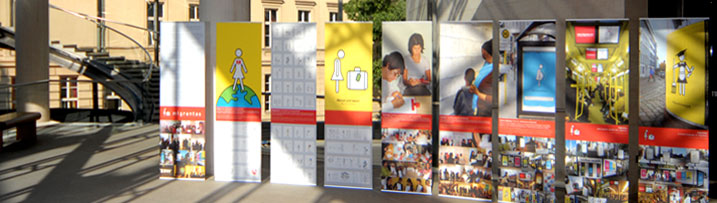
Travelling exhibition
| Wanderausstellung
This travelling exhibition presents the results of the
numerous socio-cultural projects which migrantas have undertaken in Berlin,
Buenos Aires, Hamburg and Cologne since 2003. Bilingual texts and numerous
images are used to explain the work we have done together with hundreds
of migrant women. The exhibition focuses on the unique process through which
sketches are developed into creative pictograms and how migrantas uses them
to express and make visible the everyday experiences and feelings of migrant
women.
The exhibition is suitable for congresses, conferences, and symposia on
migration and integration, as well as for display in public institutions and is accompanied by a presentation given by members of the Kollektiv migrantas.
more
The following
museums hold posters and postcards from migrantas in their collections:
Deutsches Historisches Museum, Berlin
Haus der Geschichte der Bundesrepublik Deutschland, Bonn
MAMbA Museo de Arte Moderno de Buenos Aires
Le Bois du Cazier Museum Marcinelle Belgium
DOMID Dokumentationszentrum und Museum über die Migration in Deutschland
e.V.
MhIC Museu d´história de la immigració de Catalunya
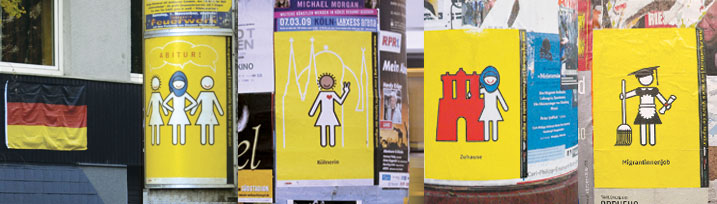
Bundesmigrantinnen
| Images of migration
in Germany's urban space
After completing our highly acclaimed projects in
Berlin, migrantas successfully expanded to other cities in Germany, including
Hamburg in 2007, Cologne in 2008, Berlin in 2013, Nuremberg in 2013 and Oldenburg in 2019. By making contact with local government
representatives in numerous places, migrantas began developing a network
which enabled us to further our socio-cultural project 'Bundesmigrantinnen
– Bilder der Migration im öffentlichen Raum'. Pictograms which
reflect the feelings and daily lives of migrant women not only highlight
many of the often quite local trends in the participants' migrational and
cultural backgrounds, they also depict the specific perceptions and realities
of life in Germany's various cities and regions.
We would be very happy to work together with individuals from other cities,
local government, and social or cultural institutions in order to continue
our project, 'Bundesmigrantinnen – Bilder der Migration im öffentlichen
Raum'.
Contact: info@migrantas.org
--------------------------------------------------------------------------------------------------------------------------------------------
migrantas team
The migrantas collective receives no funding for its day-to-day work.
Instead, the collective´s work is made possible through the commitment
of its freelance members. The diverse projects undertaken by migrantas,
as well as those in wich the collective participates, rely on direct funding
or funding provided through partner organisations. Although the actual
form of funding granted depends on the location and purpose of each project,
it always remains strictly project-based. migrantas has received funding
from various institutions, and in the following, these organisations are
clearly stated alongside the relevant projects.
Marula Di Como (graphic artist) has been using pictograms
as a means of artistic expression since 2000, in
Buenos Aires and worked together with Florencia Young (graphic designer).
Both met again in Berlin in 2002 and started “Proyecto Ausländer”,
it´s about their experiences and feelings to be foringers in Berlin.
In 2004 with the idea to spanded the project to womens from differents
cultures, origins, residence status, cultural or social backfround decided
to invite Estela Schindel (sociologist) and found together the collecive
Migrantas. 2006 Irma Leinauer (urban planner) joined the collective, as
did Alejandra López (journalist) in 2007 and Francesca La Vigna
(political scientist) in 2013. Since 2019, Anemone Vostell (cultural manager)
supports the organisation and mediation of the project. In 2011 Migrantas
has been awarded with the Hauptstadtpreis für Toleranz und Integration
(“Capital City Award for Tolerance and Integration”) Initiative
Hauptstadt Berlin e.V. En el año 2022 has been awarded wwhit the 15. Landesintegrationspreis Brandenburg.
Marula Di Como
Born in Buenos Aires, Argentina and has lived in Berlin since 2002. She
is an artist, and has been exhibiting both on her own and with other artists
installative, collaborative and participative since 1987 in dfferents
formats , media. She developed their work in a context marked by the materiality
of the tension between image and word, the relationship with nature, the
sound, the feminine condition and the urban space. Her work can be found
in international museums, foundations, and private collections.
Florencia Young
Born in Buenos Aires and has lived in Berlin since 2002. She studied graphic
design at the UBA (Buenos Aires), and has taught typography at a number
of universities. She specialises in corporate identity design and multimedia
stations, but is also involved in art installations and interdisciplinary
projects.
Estela Schindel
Born in Buenos Aires and has lived in Berlin since 1999. Dr. sociology.
2005: Integration, 2006: Bilder bewegen, Interkulturelle Werkstatt, 2007:
Bundesmigrantinnen Hamburg, 2018: Ich-Erzählungen.
Irma Leinauer
Born in Peiting, Germany and has lived in Berlin since 1985. Urban Planner.
2007: Bundesmigrantinnen Hamburg, 2008: Bundesmigrantinnen Köln,
2009: Postkarten-Sommer-Aktion, 2010: Sevilla Plural, Hier und dort Heimat,
2011: Europa-Kind + Europa-Schule, 2012: Unsere Neue Welt, 2018: Ich-Erzählungen.
Alejandra López
Born in Resistencia, Argentina and has lived in Berlin since 2001. Journalist.
2007: Bundesmigrantinnen Hamburg, 2008: Bundesmigrantinnen Köln,
2009: Postkarten-Sommer-Aktion, 2010: Sevilla Plural, 2018: Ich-Erzählungen.
Julia Dócolas
Born in Porto Alegre, Brazil, lives in Berlin since 2009. Journalist and Human Resources Manager.
2013: Bundesmigrantinnen Berlin und Nürnberg
Francesca La Vigna
Born in Rieti, Italy and has lived in Berlin since 2009. MA Political
Science.
2016: Brauchst du Hilfe?, 2017: Gleichwertig, 2017 - 2018 Let's get visible!, 2017-20: My Health, 2018: Ich-Erzählungen, 2019 - 2020: Migrantischeperspektiven, 2020: Familie, Beziehungen & Zusammenleben, 2020-21: Kolonialismus im Spiegel, 2022: Ich gehöre dazu! Die schwarze Community äußert sich, 2023: Gespräch in Bildern - Wir durch Kunst
Alejandra Tomei
Buenos Aires, Argentinien and has lived in Berlin since 1989. Photofrapher & Stop-Motion, Handmade Animation und Trickfilm.
2011: Europa Kind + Europa Schule, 2015-16: Kinderrechte,
2018: Brauchst du hilfe?, 2020-21 Kolonialismus im Spiegel, 2023-23 Parcour der Veränderung
Sandra Feferbaum
Born in Buenos Aires, Argentina and has lived in Berlin since 2013. Graphic
design (UBA)
2017: Zusammenleben in der Einwanderungsgesellschaft, 2018: Ich-Erzählungen.
2020: Mirroring colonialism
Carolina Mantilla
Bucaramanga, Colombia, and has live in Berlin since 2005. MA International Relations, Diplom in Finanz und International Bussines
2019: My Health
Micaela Sanchez
Quito ,Ecuador and has live in Germany since 2013. Social scientist, MA Latin American Studies
2024 - 2025: Unsere Bibliothek = Unsere Vielfalt, Persönliche Widmungi Tempelhof-Scöneberg and Mitte
Wikipedia:
Lelia Fabiana Perez
Translations
Simon Phillips (En) | Julia Dócolas (Pt) | Francesca La Vigna (It) |
Cecile Belmont (Fr)
Vocational trainees
Take part on the Project Bundesmigrantinnen: Julia Dócolas (2013)
Taken on as part of LEONARDO DA VINCI programme in association with the
'Fundación General de la Universidad de Salamanca': Ana de Dios
(2010); Ursula Mateo (2006); Eugenia Carranza (2006); and Neus Torres
Bonet (2005).
For the Erasmus Programme: Emma Anduix (2010). For the Alice Salomon University
of Applied Siences Berlin: Ricardo Sousa y Margarida Ramos
(2014). Eva Peces Guerrero (2015), Bard College Berlin: Clara Canales (2016), Universidad de Palermo- Bs.As.: Ailen Iza (2016). Alice Salomon
University of Applied Siences Berlin: Sara Lopez Henao (2019) + Jessica Dolan (2022).
Donations
We thank you for your support:
Bank details
recipient:
Migrantas e.V.
IBAN:
DE64100100100925085102
:
PBNKDEFF
Kreditinstitut:
Postbank Nürnberg
SWIFT / BIC:
PBNKDEFF
Contact information
Gemeinnütziger Verein migrantas e.V.
Vorsitzende: Martin Iannaccone
Stellvertretender: C. M. Nijensohn
Kassiererin: Karin Kupke
Registergericht: Amtsgericht Charlottenburg
Registernummer: VR 34406 B
Am Sudhaus 2 - 12053 Berlin
info@migrantas.org
Disclaimer
Responsible for the content of this website in accordance with paragraph
5 of the German Teleservices Act (TMG § 5): Marula Di Como und Florencia
Young.
Although external links were carefully chosen, we take on no liability
nor shall we be made liable for the content of websites linked from this
site. The content provided by these links is the sole responsibility of
the external content provider.
All rights reserved. This website is protected by copyright in its entirety.
No part of this website may be reproduced or published or alteration in
any form or by any means, without the prior written permission of both
Marula Di Como and Florencia Young. This includes all pictograms, data,
texts, graphics, photos, drawings, pictures and all other parts of this
website.
Data protection
Privacy Policy
Personal data (usually referred to just as "data" below) will only be processed by us to the extent necessary and for the purpose of providing a functional and user-friendly website, including its contents, and the services offered there.
Per Art. 4 No. 1 of Regulation (EU) 2016/679, i.e. the General Data Protection Regulation (hereinafter referred to as the "GDPR"), "processing" refers to any operation or set of operations such as collection, recording, organization, structuring, storage, adaptation, alteration, retrieval, consultation, use, disclosure by transmission, dissemination, or otherwise making available, alignment, or combination, restriction, erasure, or destruction performed on personal data, whether by automated means or not.
The following privacy policy is intended to inform you in particular about the type, scope, purpose, duration, and legal basis for the processing of such data either under our own control or in conjunction with others. We also inform you below about the third-party components we use to optimize our website and improve the user experience which may result in said third parties also processing data they collect and control.
Our privacy policy is structured as follows:
I. Information about us as controllers of your data
II. The rights of users and data subjects<br>III. Information about the data processing
I. Information about us as controllers of your data</h3>
The party responsible for this website (the "controller") for purposes of data protection law is
Gemeinnütziger Verein migrantas e.V Am Sudhaus 2, 12053 Berlin Germany
Email: info@migrantas.org
II. The rights of users and data subjects</h3>
With regard to the data processing to be described in more detail below, users and data subjects have the right
to confirmation of whether data concerning them is being processed, information about the data being processed, further information about the nature of the data processing, and copies of the data (cf. also Art. 15 GDPR);
to correct or complete incorrect or incomplete data (cf. also Art. 16 GDPR);
to the immediate deletion of data concerning them (cf. also Art. 17 DSGVO), or, alternatively, if further processing is necessary as stipulated in Art. 17 Para. 3 GDPR, to restrict said processing per Art. 18 GDPR;
to receive copies of the data concerning them and/or provided by them and to have the same transmitted to other providers/controllers (cf. also Art. 20 GDPR);
to file complaints with the supervisory authority if they believe that data concerning them is being processed by the controller in breach of data protection provisions (see also Art. 77 GDPR).
In addition, the controller is obliged to inform all recipients to whom it discloses data of any such corrections, deletions, or restrictions placed on processing the same per Art. 16, 17 Para. 1, 18 GDPR. However, this obligation does not apply if such notification is impossible or involves a disproportionate effort. Nevertheless, users have a right to information about these recipients.
Likewise, under Art. 21 GDPR, users and data subjects have the right to object to the controller's future processing of their data pursuant to Art. 6 Para. 1 lit. f) GDPR. In particular, an objection to data processing for the purpose of direct advertising is permissible.
III. Information about the data processing
Your data processed when using our website will be deleted or blocked as soon as the purpose for its storage ceases to apply, provided the deletion of the same is not in breach of any statutory storage obligations or unless otherwise stipulated below. Server data
For technical reasons, the following data sent by your internet browser to us or to our server provider will be collected, especially to ensure a secure and stable website: These server log files record the type and version of your browser, operating system, the website from which you came (referrer URL), the webpages on our site visited, the date and time of your visit, as well as the IP address from which you visited our site.
The data thus collected will be temporarily stored, but not in association with any other of your data.
The basis for this storage is Art. 6 Para. 1 lit. f) GDPR. Our legitimate interest lies in the improvement, stability, functionality, and security of our website.
The data will be deleted within no more than seven days, unless continued storage is required for evidentiary purposes. In which case, all or part of the data will be excluded from deletion until the investigation of the relevant incident is finally resolved.
Contact
If you contact us via email or the contact form, the data you provide will be used for the purpose of processing your request. We must have this data in order to process and answer your inquiry; otherwise we will not be able to answer it in full or at all.
The legal basis for this data processing is Art. 6 Para. 1 lit. b) GDPR.
Your data will be deleted once we have fully answered your inquiry and there is no further legal obligation to store your data, such as if an order or contract resulted therefrom.
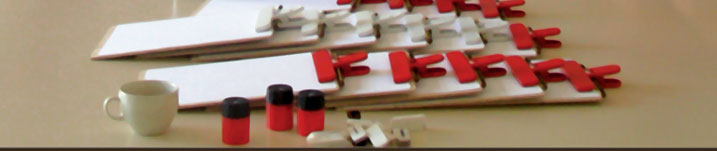
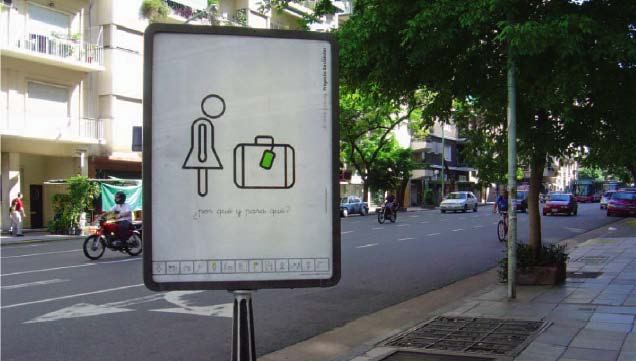
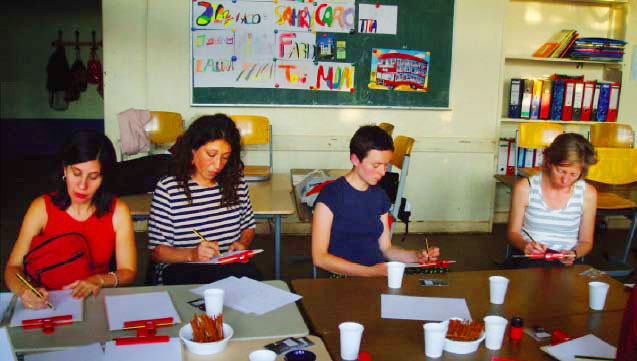
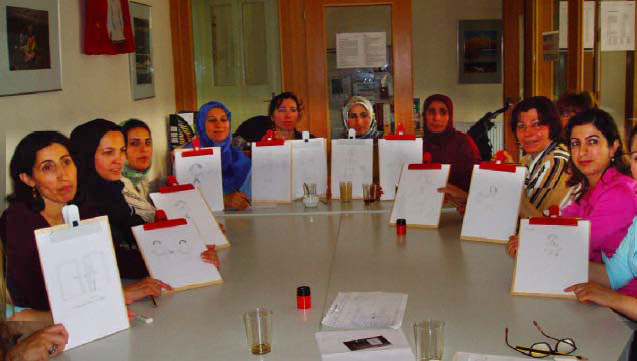

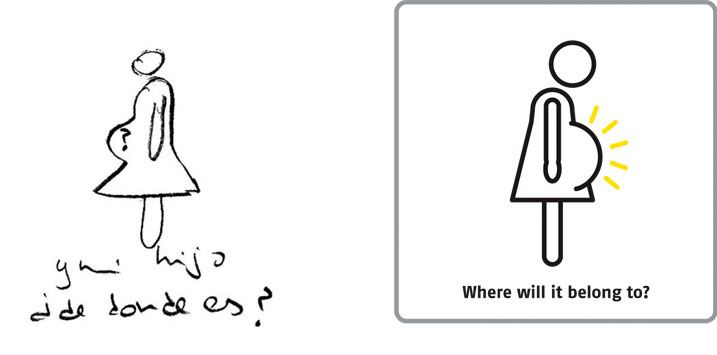
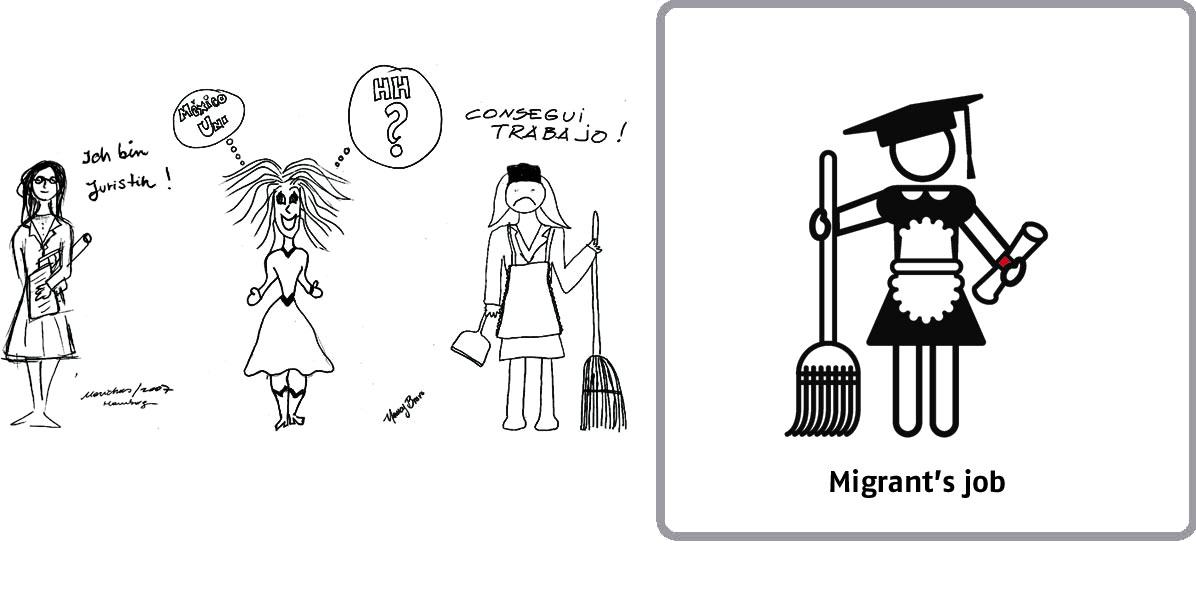
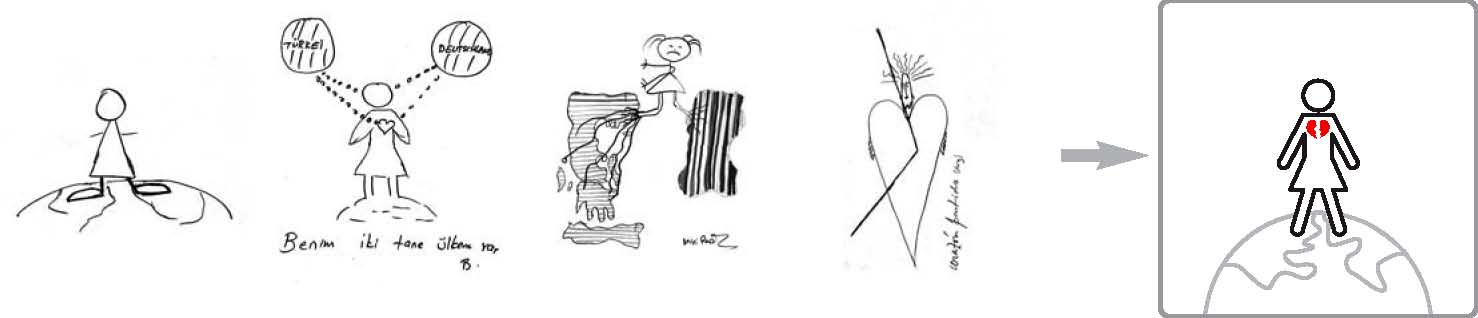
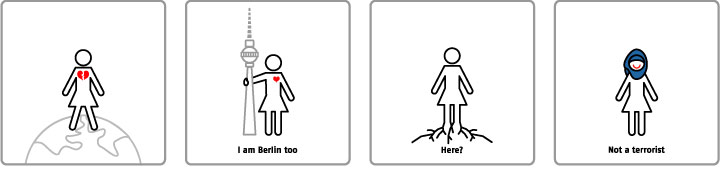

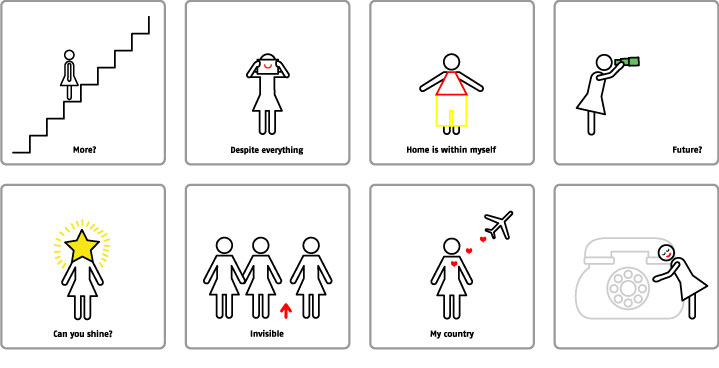
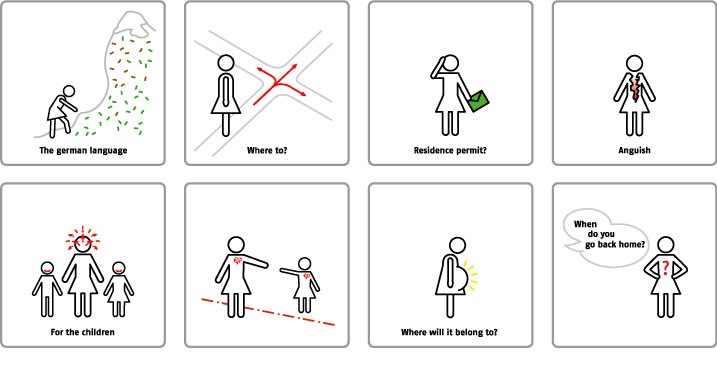
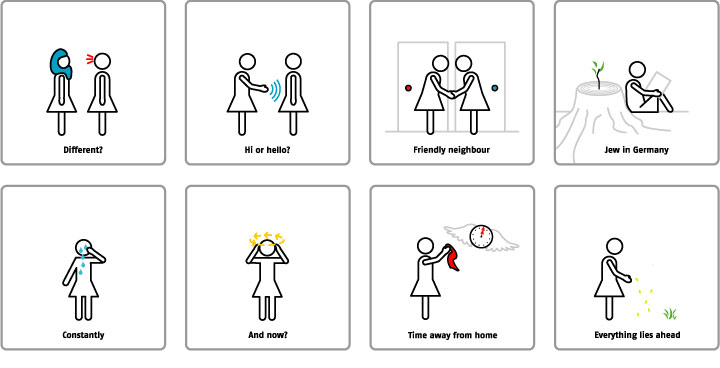
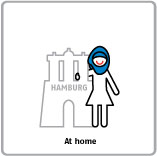
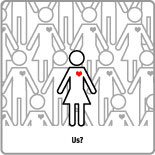

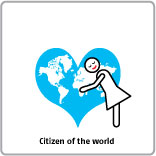

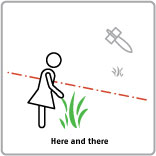





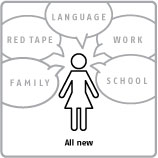
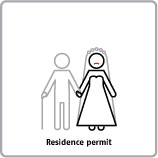
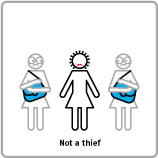
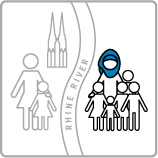
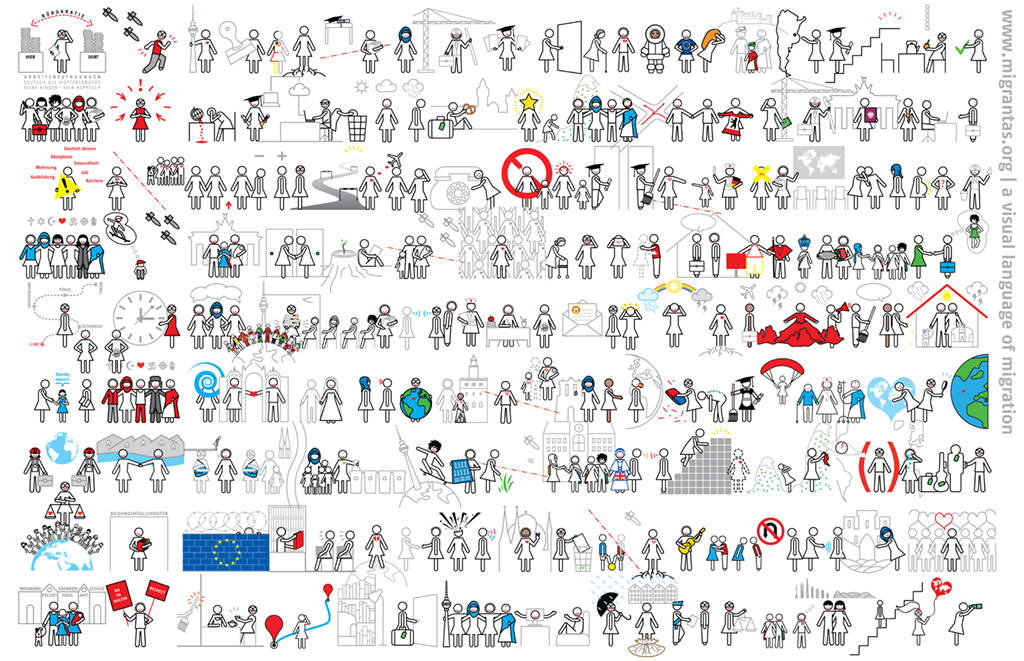
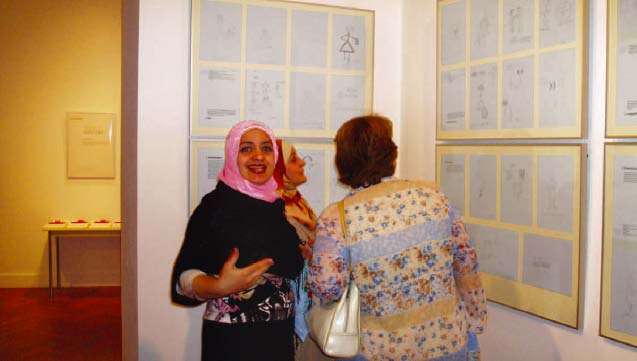
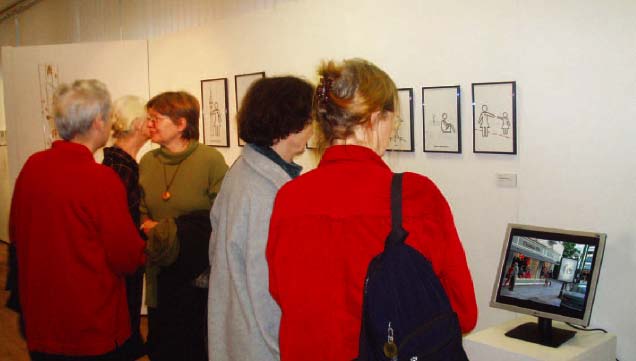
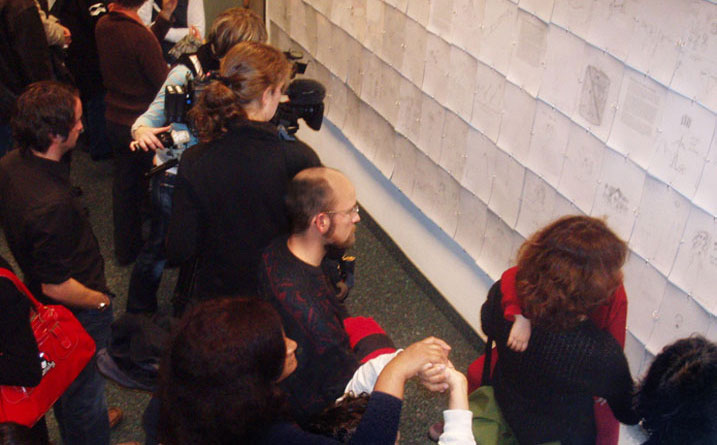
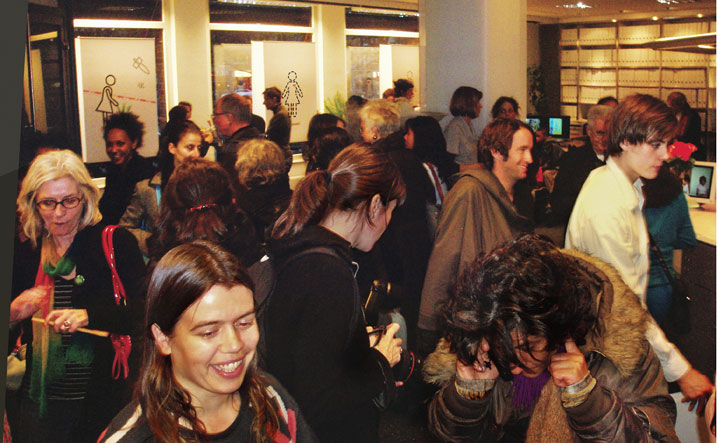

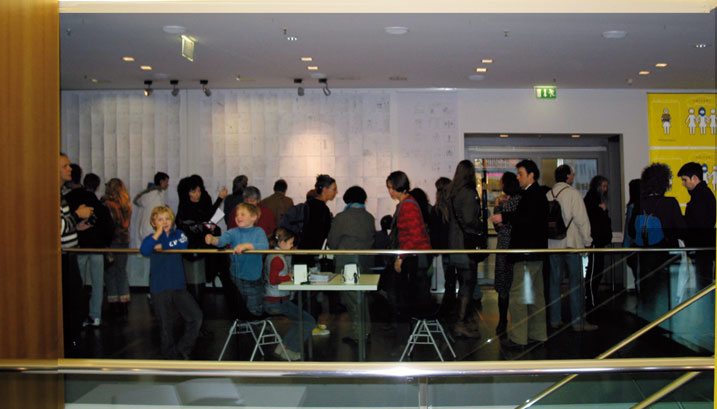
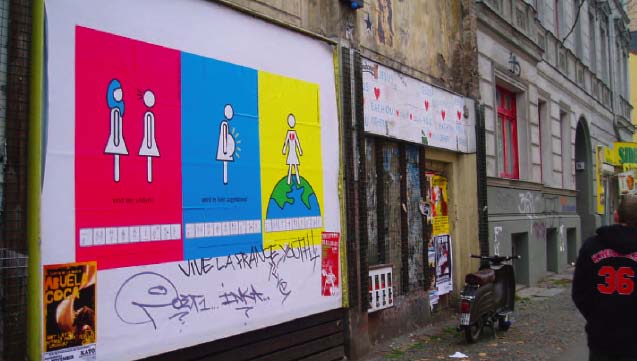

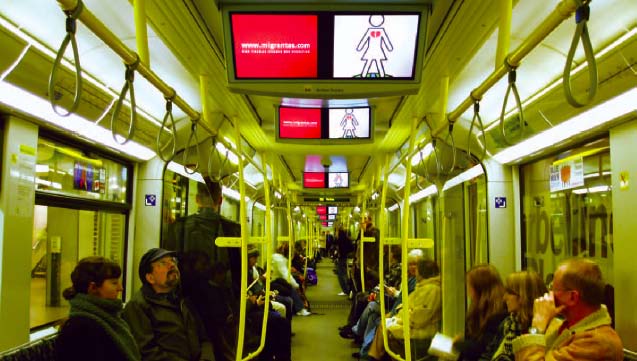
 2007
| Bundesmigrantinnen | Hamburg
2007
| Bundesmigrantinnen | Hamburg